

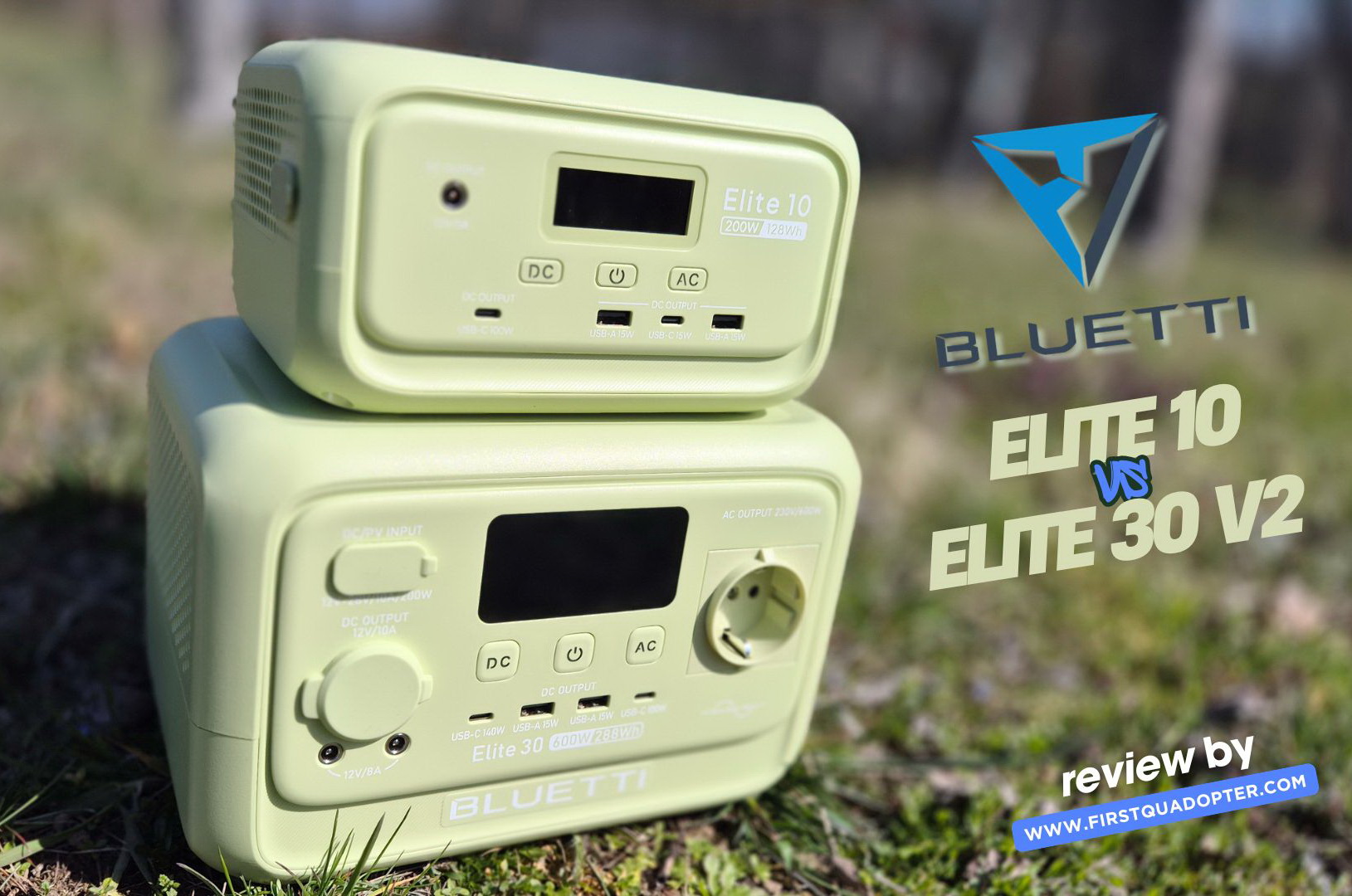
Initially, I planned to write a full in-depth review of the Bluetti Elite 10. However, since I had already published an article about this ultra-compact power station, I thought it would be more interesting to create a detailed comparison with its bigger brother, the Elite 30 V2. In this article, I go through the specs and features of both models to highlight the strengths and weaknesses of each. The goal is to help you decide which portable power station best fits your needs, whether you prioritize compact portability or higher capacity for extended use.
Bigger isn’t always better—at least not when it comes to portable power stations. Units in the 2–4 kWh range are heavy and pretty expensive, so why break your back and empty your wallet if a much smaller and lighter unit can do the job just fine?
Imagine going camping with minimal gear and bringing a massive power station just to charge your phone. That’s like taking a diesel generator to toast a slice of bread. For simple needs—like keeping your phone alive, charging a drone battery, or topping up a flashlight—the Bluetti Elite 10 can be perfectly adequate, especially when paired with a 100 W portable solar panel. Your back will thank you, and you’ll still have enough power to stay connected while enjoying the outdoors. Of course, if you need double the runtime or higher AC output, the Bluetti Elite 30 V2 becomes the better choice—still portable, but with enough extra power to handle more demanding devices.
Bluetti Elite 10 and Elite 30 V2: Head-to-Head Review and Comparison
Disclaimer: I received these two compact power stations from Bluetti free of charge. The Bluetti Elite 30 V2 was sent to me in October 2025, and the Bluetti Elite 10 in February 2026. Since then, I have used both units in various scenarios, and this comparison review is based on real-world experience. The opinions shared here are entirely my own and were not influenced by the sponsor in any way.
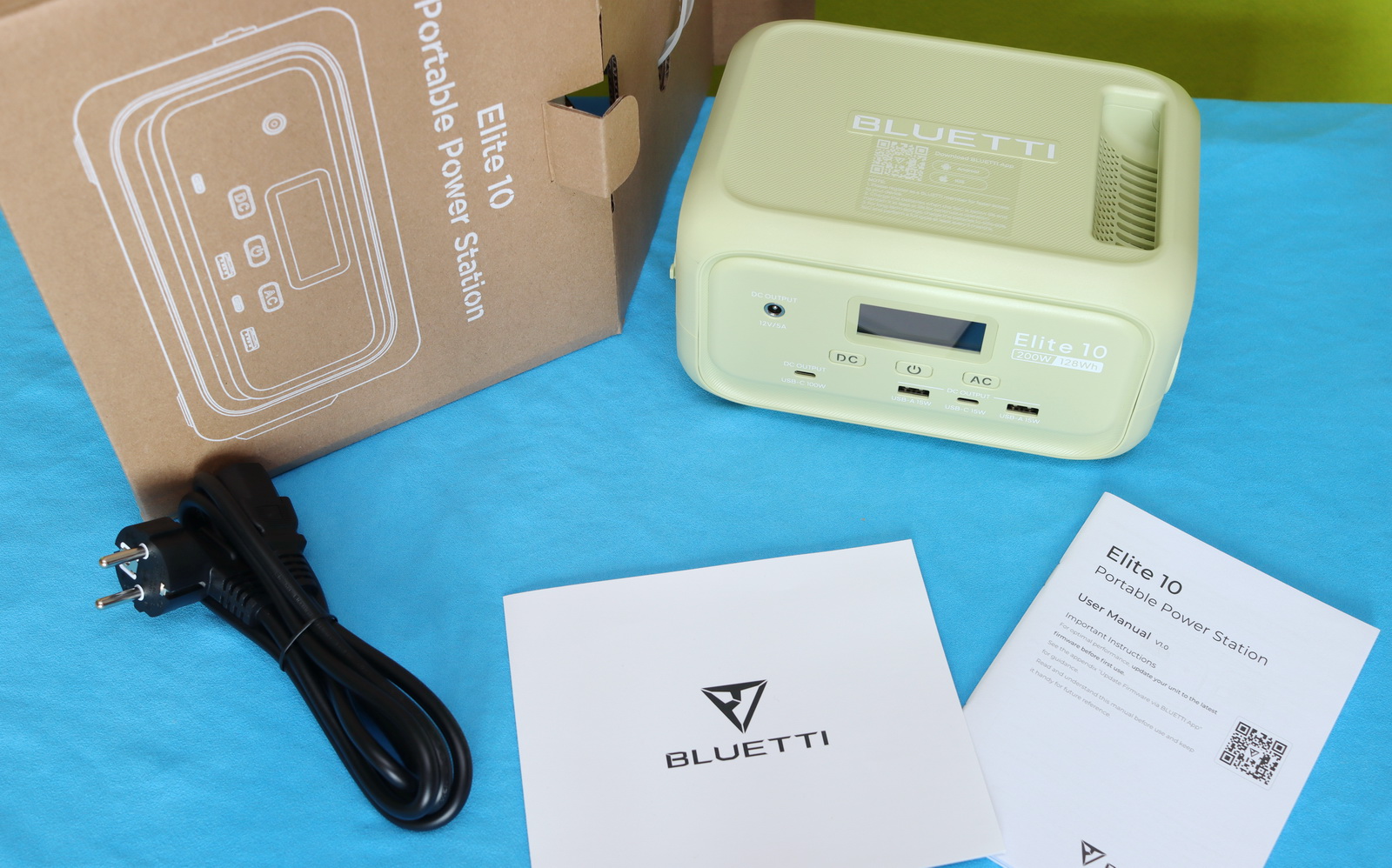
Both power stations—actually, all Bluetti units I have reviewed—arrive packaged in a double-box setup with foam padding for extra protection during shipping. The inner box also includes built-in handles, which make handling and unpacking much easier.
The Bluetti Elite 30 V2 comes with an AC power cord and a 12V car cigarette lighter adapter, while the Bluetti Elite 10 includes only the AC power cord. Personally, I would have liked to see an XT60-to-solar-panel cable included with both units, as it would make connecting portable solar panels much more convenient right out of the box.
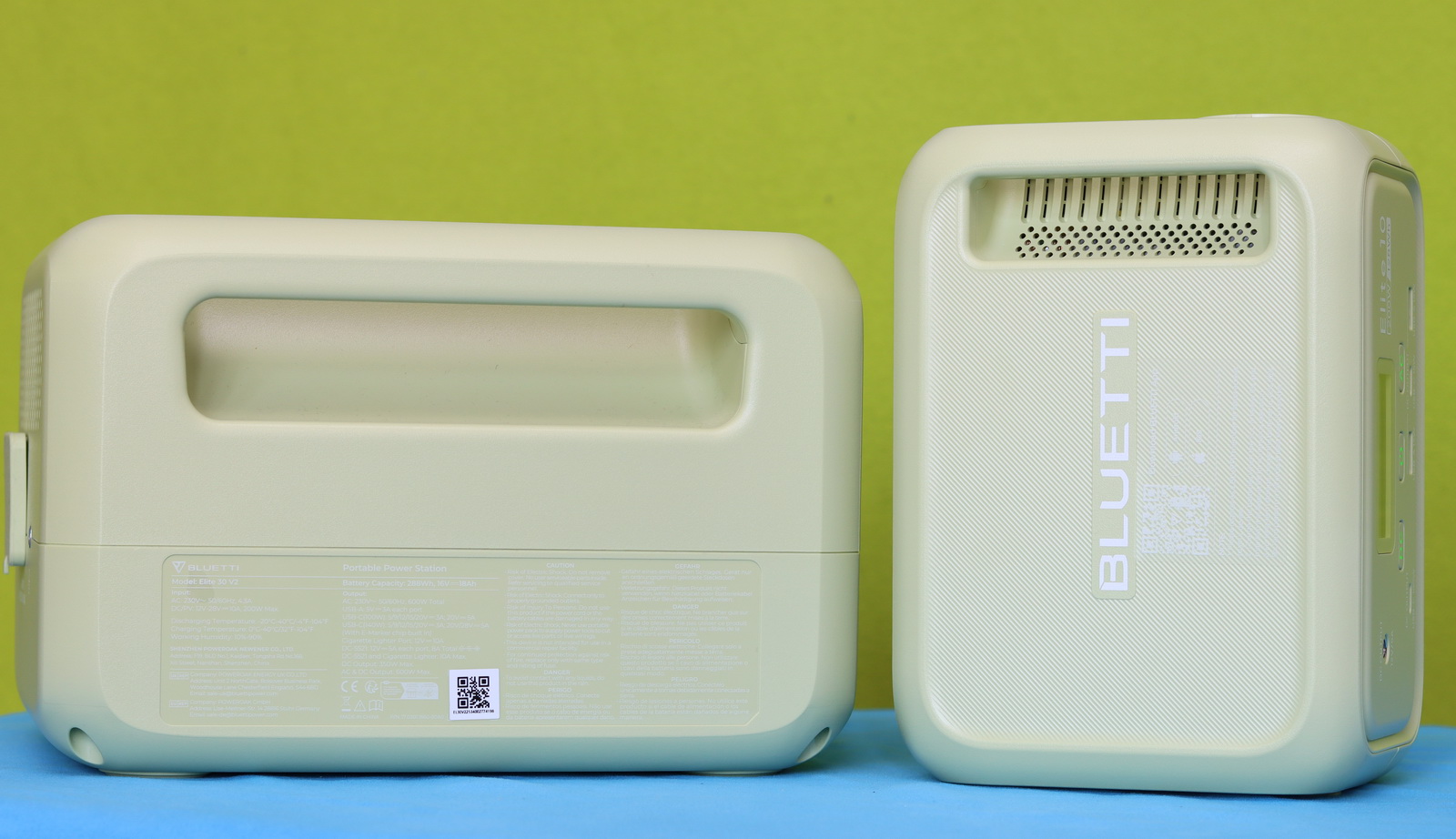
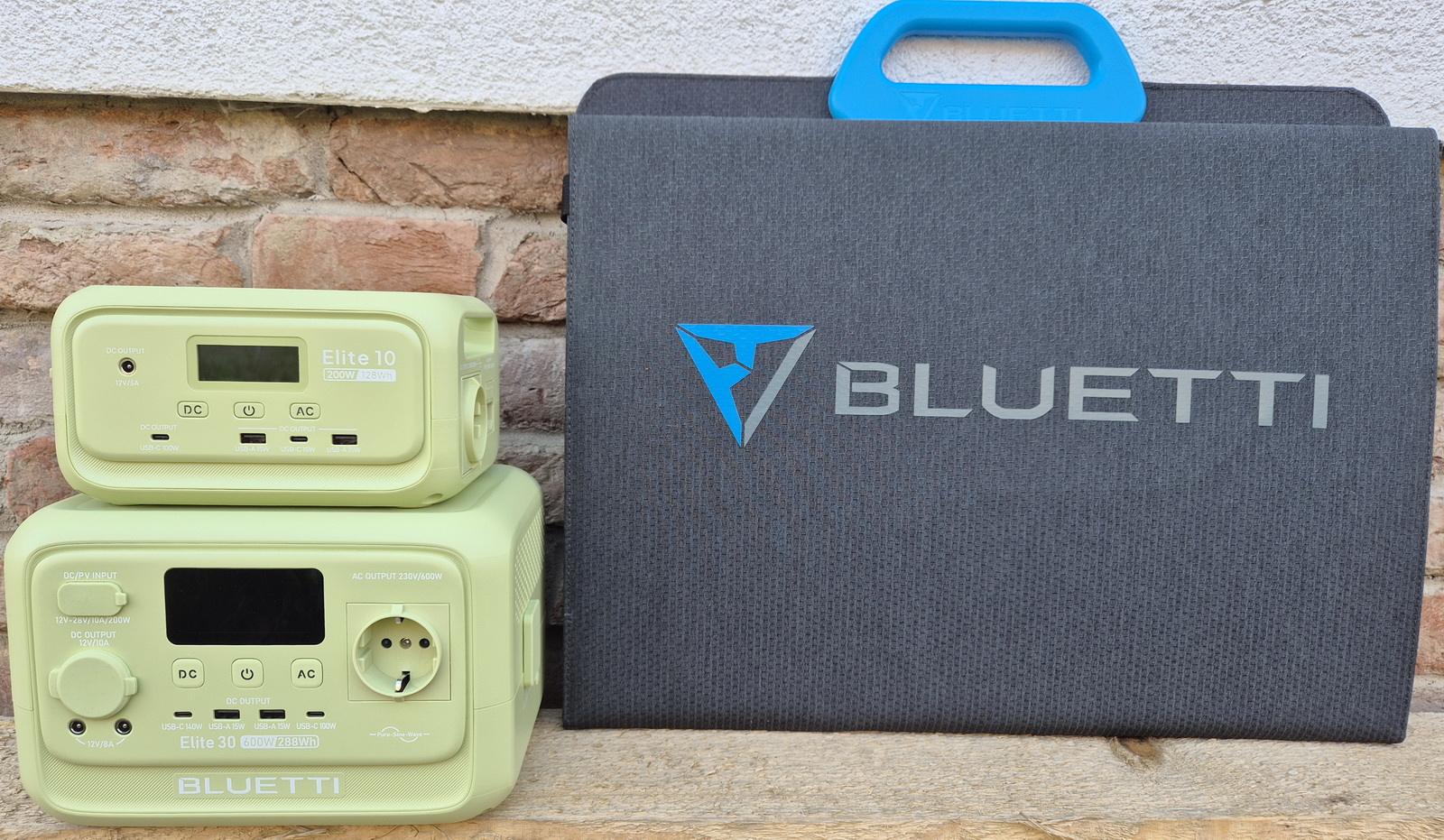
I received both in green color, but the Elite 10 is also available in Deep gray, and the Elite 30 V2 in Deep gray, Blue, Purple, and Light grey. The E10 measures 200 × 146 × 110 mm and weighs 1.8 kg, while the E30V2 measures 250 × 178 × 167.5 mm and weighs 4.3kg. Both units have a built-in handler for easy transportation.
Display and controls
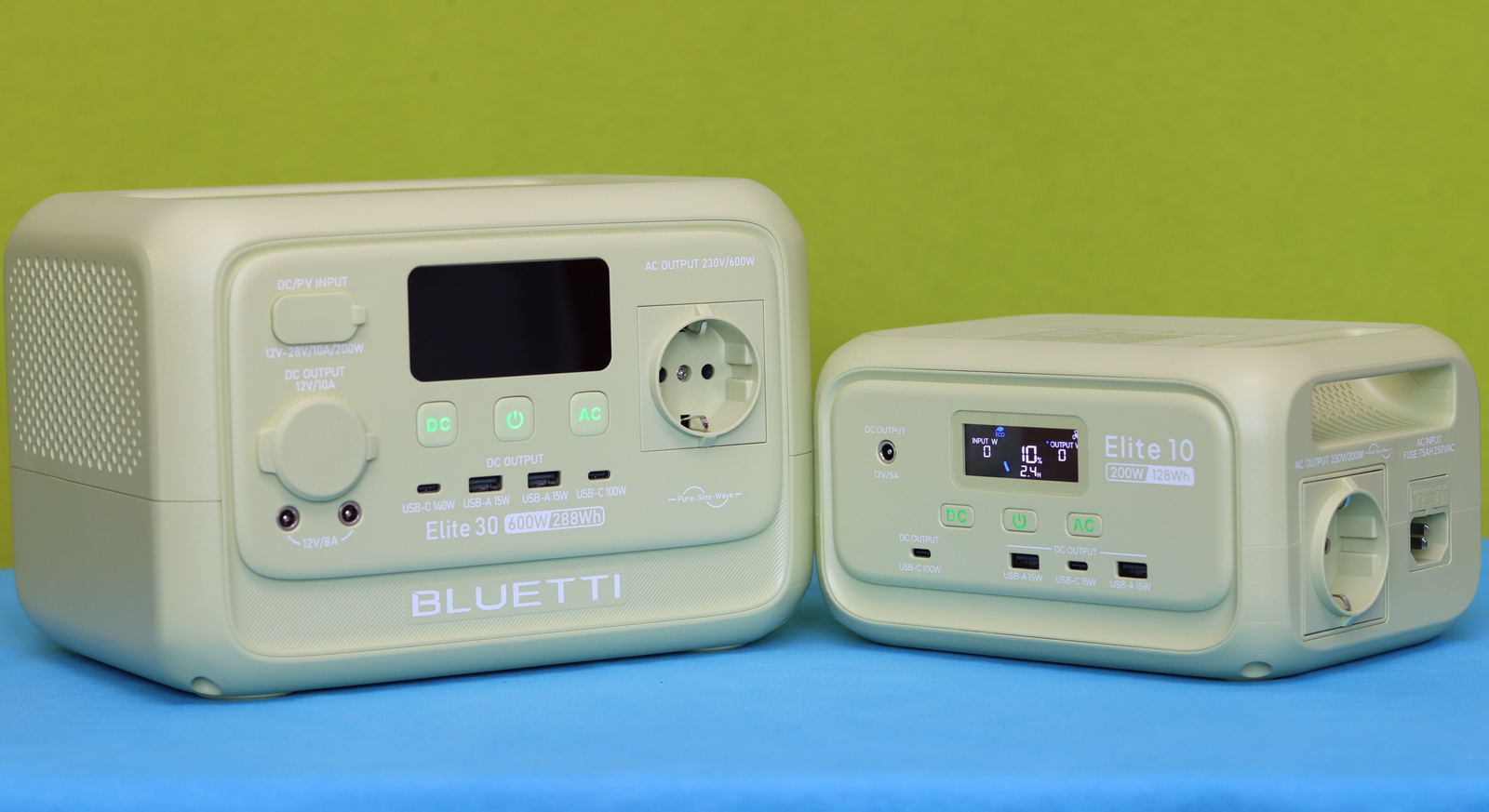
When I first got my hands on these power stations, I immediately noticed how similar their user interface layouts are. Right in the center of the front panel sits a color LCD screen that shows everything I need at a glance—battery level, input and output power, and charging status. It’s clear and easy to read, even in bright sunlight. Curiously, even though the E10’s screen is smaller, I noticed that outdoors in strong daylight, it appears brighter.
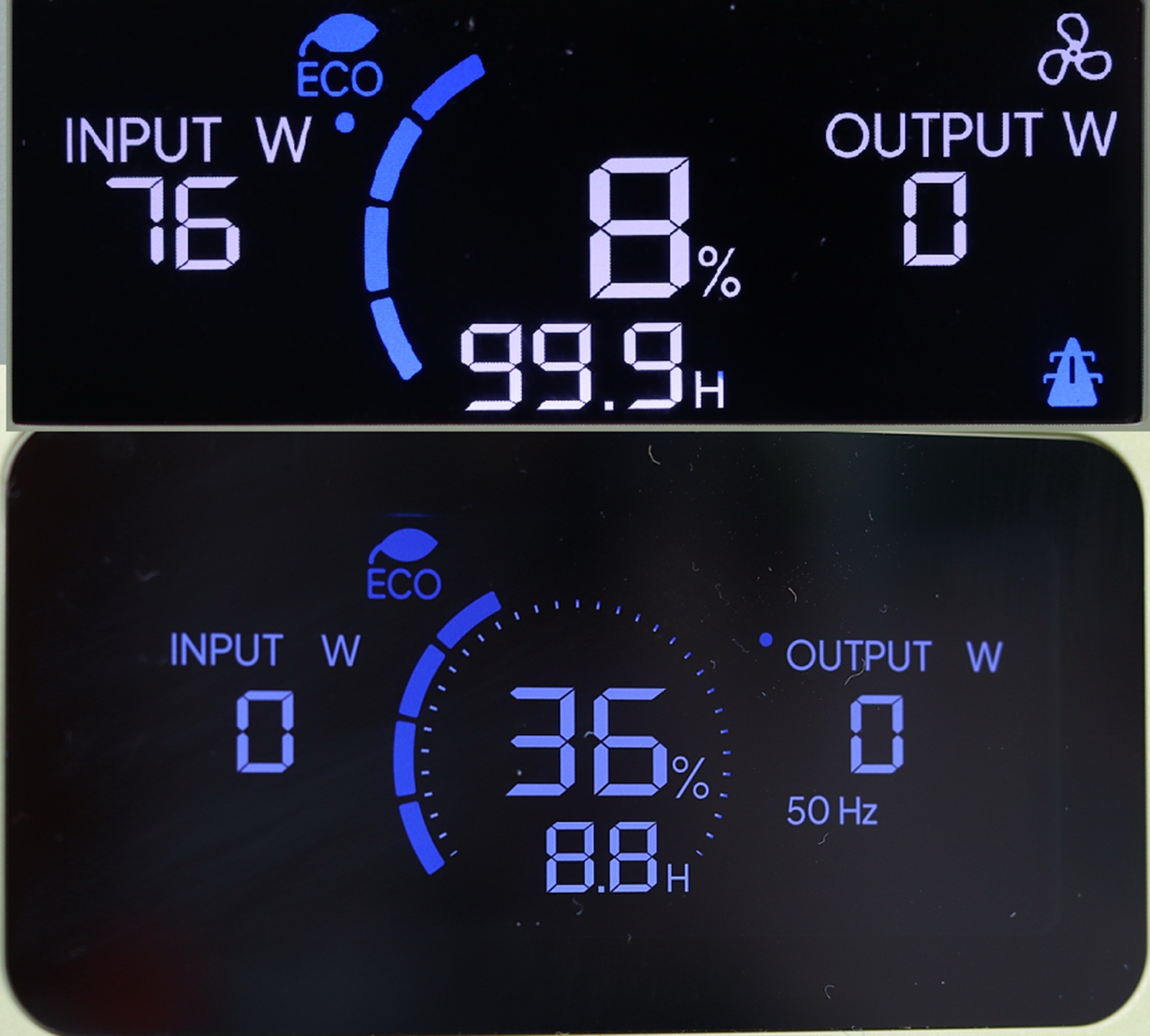
The controls are refreshingly simple. Besides the main power switch, there are only two buttons: one for AC ON/OFF and another for DC ON/OFF. I like this minimal approach—it makes turning the units on and off completely intuitive. There’s no fumbling through complicated menus or pressing the wrong button; everything I need is right there, straightforward and reliable.
Inputs and Outputs
For charging, both models feature AC and DC (XT60) ports. The Bluetti Elite 10 has a maximum combined charging and bypass power of 350W, while the Bluetti Elite 30 V2 supports up to 980W.
One small difference worth noting between the models is the number of AC outlets. Both the EU and US versions of the Bluetti Elite 10 come with a single AC output, which is usually enough for its compact, portable use case. The situation changes slightly with the Bluetti Elite 30 V2. The US (110V) version includes two AC outlets, making it easier to power multiple devices simultaneously, while the EU (220V) version features only one AC outlet.
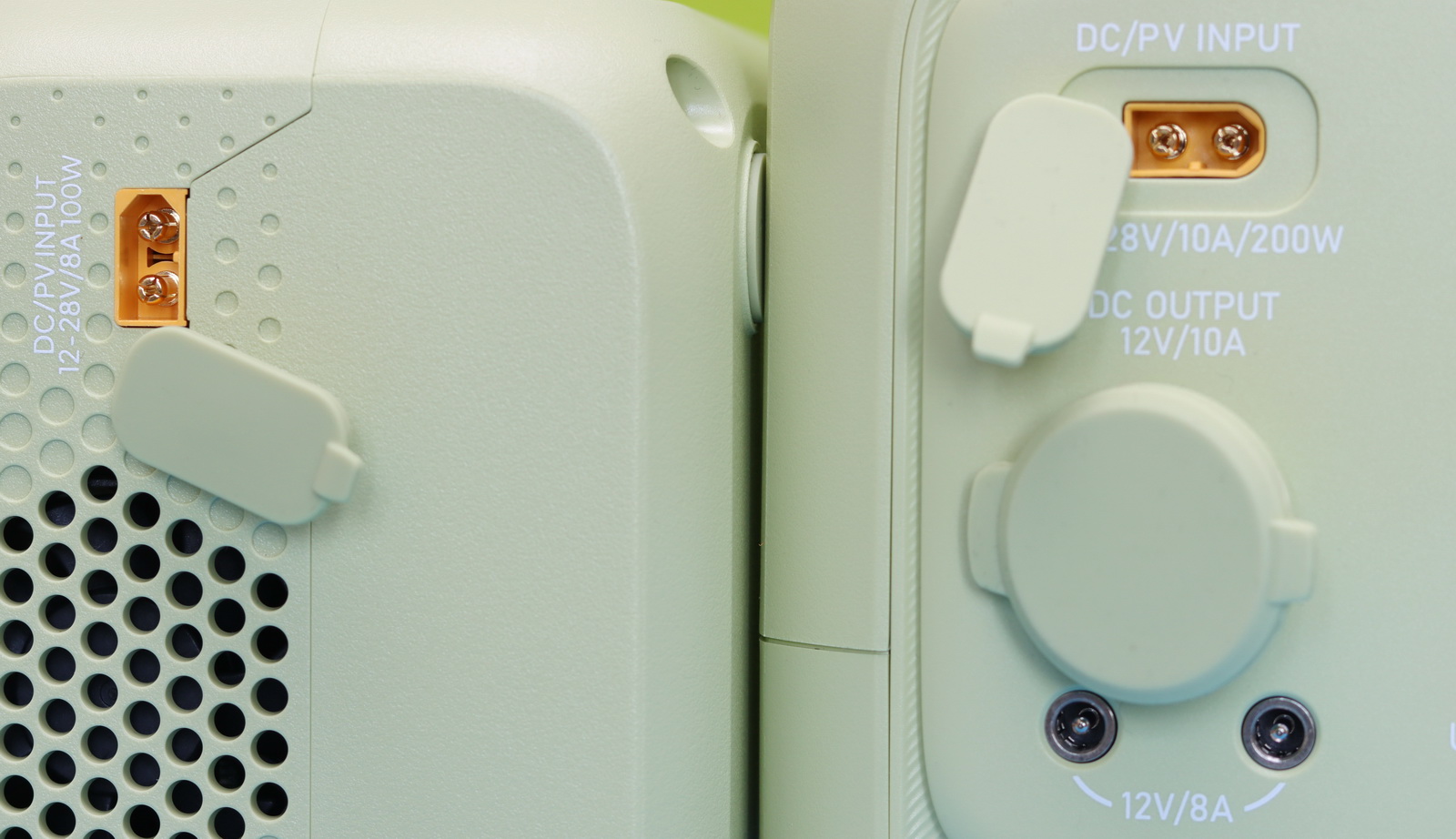
Both Bluetti power stations feature four USB ports (two USB-A and two Type-C). While the Bluetti Elite 10 offers three 15W ports and one 100W port, the Bluetti Elite 30 V2 includes two 15W ports, one 100W port, and one 140W port.
For powering 12V DC devices, the Elite 10 provides one DC5521 port rated at 60W, while the Elite 30 V2 comes with two DC5521 ports (12V/5A each) and a standard 12V/10A car outlet for additional flexibility.
For outdoor charging with green energy, the E10 supports solar panels up to 100W, while the E30V2 can handle panels up to 200W. This means that whether you’re heading out for a short trip or planning a longer adventure, both power stations let you harness the sun to keep your devices running.
Communication and mobile APP
The Bluetti Elite 10 features Bluetooth connectivity, which allows you to remotely monitor and control the power station through the mobile app—as long as you are within a few meters of the unit. It works well for quick checks or adjustments when the power station is nearby, such as in a tent, RV, or the next room.
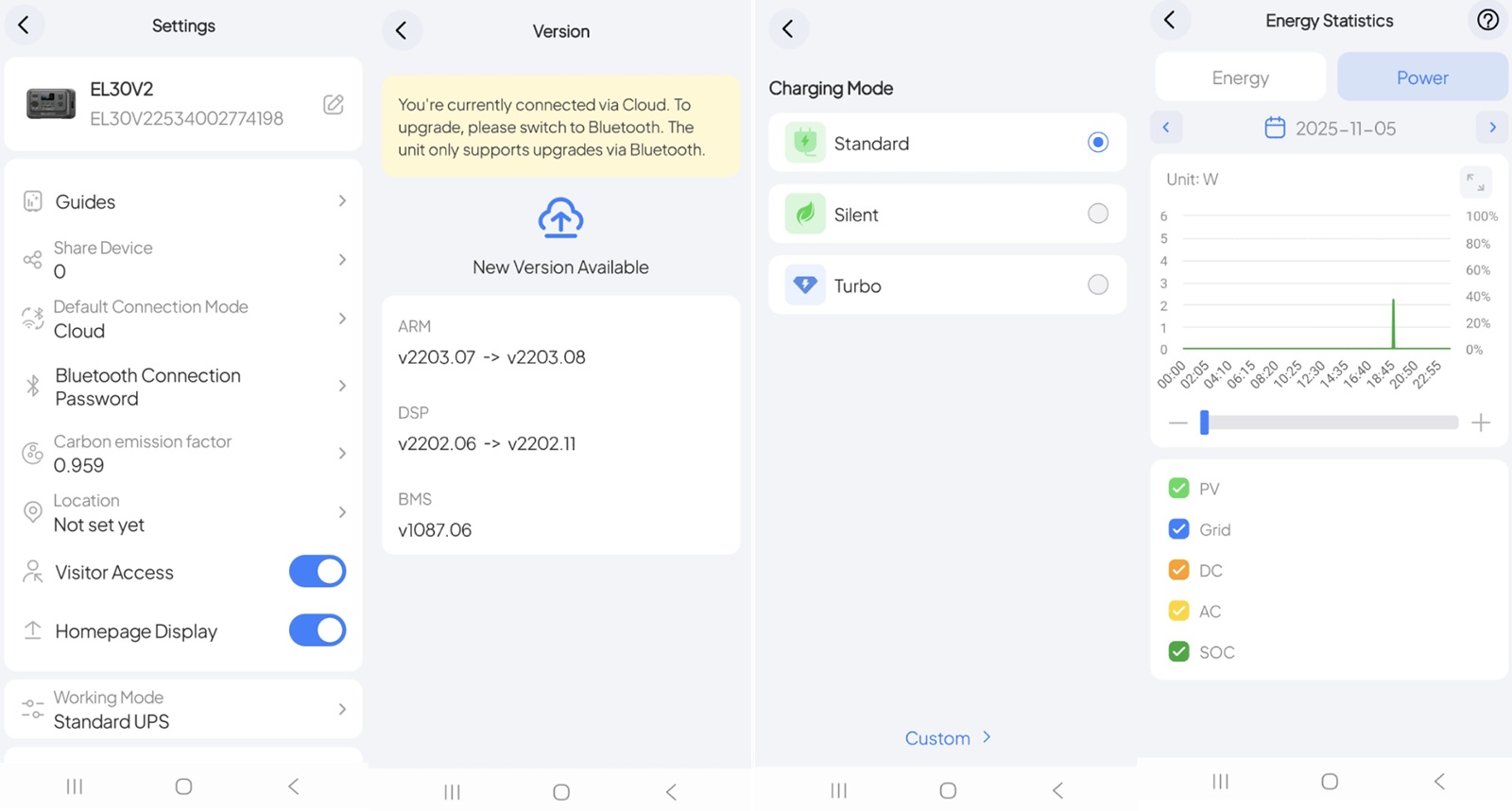
The larger Bluetti Elite 30 V2, however, goes a step further. In addition to Bluetooth, it also supports Wi-Fi connectivity, which means you can monitor and control the unit from virtually anywhere through the internet. Whether you’re at home, at work, or traveling, the ability to check battery status or switch outputs on and off remotely adds a whole new level of convenience.
The BLUETTI App is available for both Android and iOS devices and allows you to monitor all your compatible Bluetti power stations in the same dashboard. From the app, you can turn AC and DC outputs ON or OFF, change the charging mode, upgrade the firmware, or check the system’s health.
Bluetti Elite 10 vs Elite 30 V2 comparison table
If you’re too bored to read the entire review, don’t worry—I’ve gathered all the essential comparison data below to highlight the strengths and weaknesses of each model. In short, the Bluetti Elite 10 is the smaller and lighter option, making it easier to carry around, while the Bluetti Elite 30 V2 offers higher output power and a much larger battery capacity. The table below summarizes the key differences to help you quickly decide which model fits your needs best. If you want to learn more about the Bluetti Elite 30 V2, you should check out my review published a few months ago.
| Features | Bluetti Elite 10 | Bluetti Elite 30 V2 |
| Battery Capacity | ~128 Wh | ~288 Wh |
| Rated Output | 200 W | 600 W |
| Surge Output | 300W (400W lifting) | 1500W |
| Sorlar imput | 100W | 200W |
| AC Outlets | 1 × AC | 1 × AC |
| USB ports | USB-A: 15W USB-C: 15W Max. USB-C: 100W Max. |
USB-A: 15W USB-A: 15W USB-C: 140W Max. USB-C: 140W Max. |
| Wireless phone charger | No | No |
| Built-in light | Yes | No |
| Conectivity | Bluetooth | WIFI Bluetooth |
| Warrenty | 3 years | 5 years |
| Dimensiones | 200 × 146 × 110 mm 7.87 × 5.75 × 4.33 in |
250 × 178 × 167.5 mm 9.8 × 7 × 6.6 in |
| Weight | 1.8 kg (3.97 lbs) | 4.3kg (9.48lbs) |
| Color options | Deep gray and Green | Deep gray, Blue, Purple, Light grey, Green |
| Price | $119 | $239 |
Runtime: 128 Wh vs 288 Wh
What ultimately defines a power station’s runtime is its internal battery capacity, overall efficiency, and its own self-consumption during operation. The larger the energy storage (measured in watt-hours), the longer it can power your devices — assuming similar load conditions.
The Elite 10 features a 6V / 40,000 mAh battery pack, which translates to 128 Wh of usable energy. In comparison, the Elite 30 V2 is equipped with a 12V / 18Ah battery, delivering a significantly higher capacity of 288 Wh.
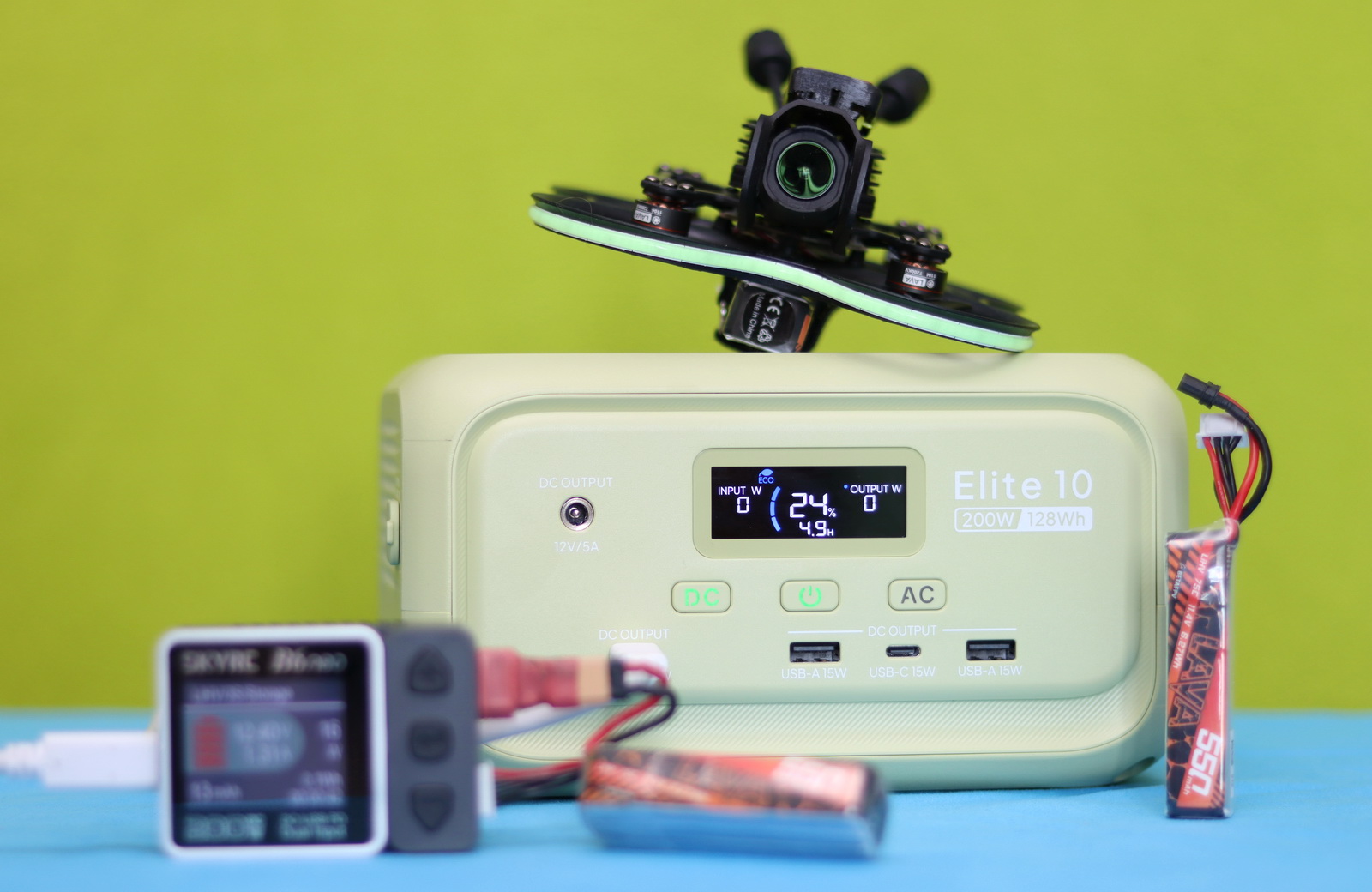
In practical terms, this means the Elite 30 V2 can run devices for more than twice as long as the Elite 10 under similar power demands. Of course, actual runtime will vary depending on the connected load, inverter efficiency, and background power draw of the unit itself.
| Device / Appliance | Bluetti Elite 10 | Bluetti Elite 30 V2 |
| Drone (60Wh) | 2 times | 4 times |
| Smartphone (15Wh) | 6 times | 15 times |
| iPad / Tablet (20Wh) | 5 times | 10 times |
| Starlink (30Wh) | 3 hours | 7 hours |
| Bluetooth speaker (12Wh) | 7.8 hours | 14.5 hours |
| Electric guitar (120Wh) | 1 hour | 1.8 hours |
| CPAP (15Wh) | 8 hours | 12.3 hours |
Pricing, availability, and combo options
The Bluetti Elite 30 V2 was introduced in August 2025, and the Bluetti Elite 10 in November 2025. Right now, both models are on sale at bluettipower.com. The Elite 10 is discounted from US$199.00 to US$119 (≈$0.93/Wh), and the Elite 30 V2 from US$299.00 to US$219 (≈$1.35/Wh). Both units are also available in bundles with 60W or 100W portable solar panels. For faster order processing, Bluetti has multiple warehouses around the world, including Canada, where the E10 is priced at C$169 and the E30 V2 at C$279.
What Are Compact Power Stations Used For?
Both models feature a built-in inverter that allows powering not just DC devices but also sensitive AC devices. Unfortunately, due to their small capacity, the usability is limited.
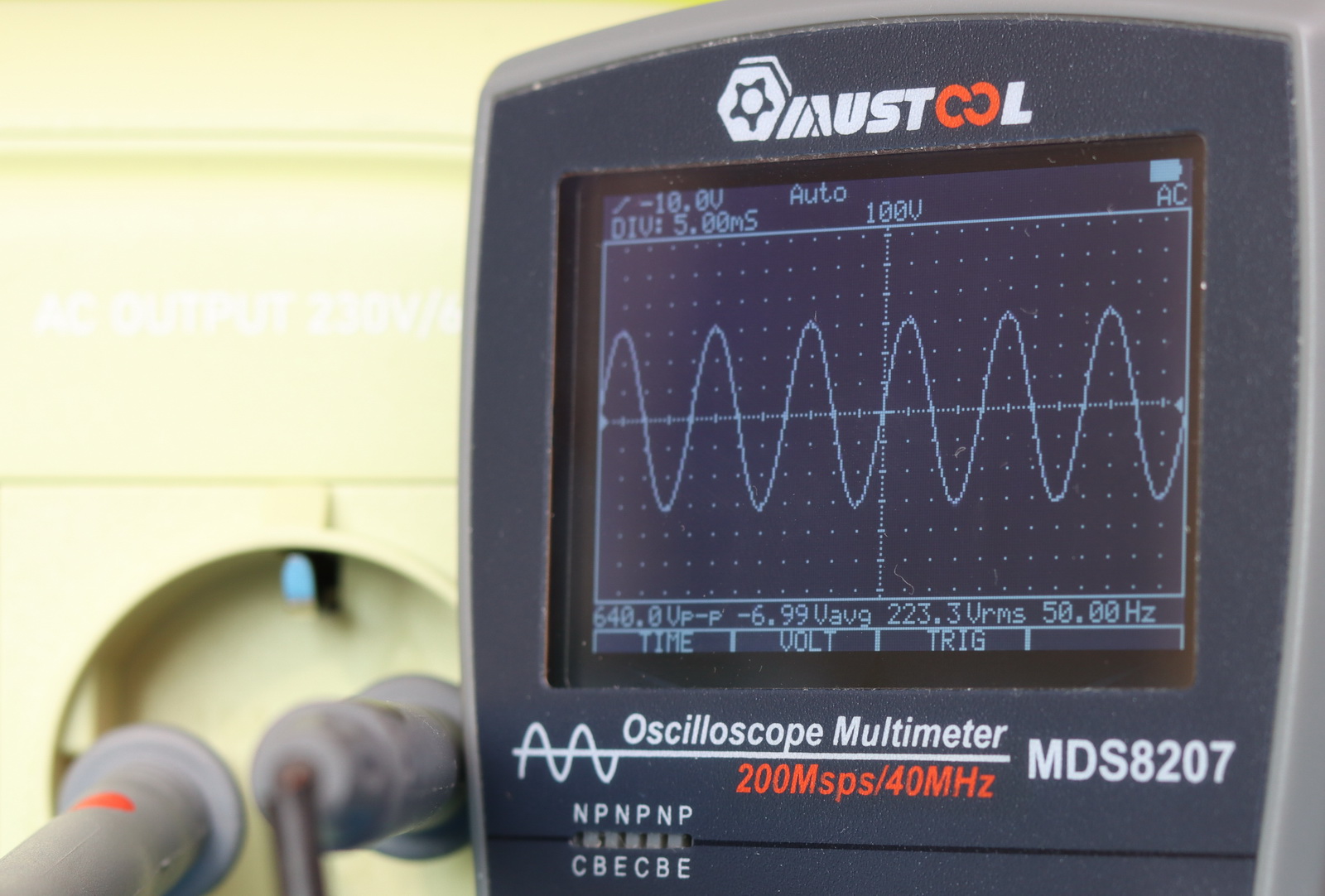
Personally, I use the Bluetti Elite 10 during my flight sessions. I really like how compact it is—it fits easily into my backpack without any hassle. It allows me to charge 20+ Whoop batteries, which is more than enough for a full day of flying. And if I still have charged packs left at the end of the session, I can safely transfer that energy back into the power station, since it’s not recommended to store LiPo batteries fully charged.
At home, I’ve installed the Bluetti Elite 30 V2 as an uninterruptible power source (UPS) in my communication rack. It keeps my router, NVR, PoE cameras, and burglar alarm system running during short outages. Before this setup, I was using an older 1000VA APC UPS—it was bulky and noisy, and I had to replace the lead-acid batteries almost every year. The upgrade feels like a big step forward in both convenience and reliability.
You Can Trust Our Reviews!
Since 2014, FirstQuadcopter has reviewed, thoroughly tested, and rated hundreds of products, including drones, gimbals, power stations, action cameras, 3D printers, video lights, and other high-tech gear to help you make better buying decisions.
We don’t do paid reviews or agree to affiliate links. All products are tested fairly and equally, and if anything changes over time, I will update the written reviews.
As always, if you found this review helpful, don’t forget to like, share, comment, and bookmark for more content like this!


I have two Elite 10 Minis. They’re great for travel—I prefer them over powerbanks because they have AC output.