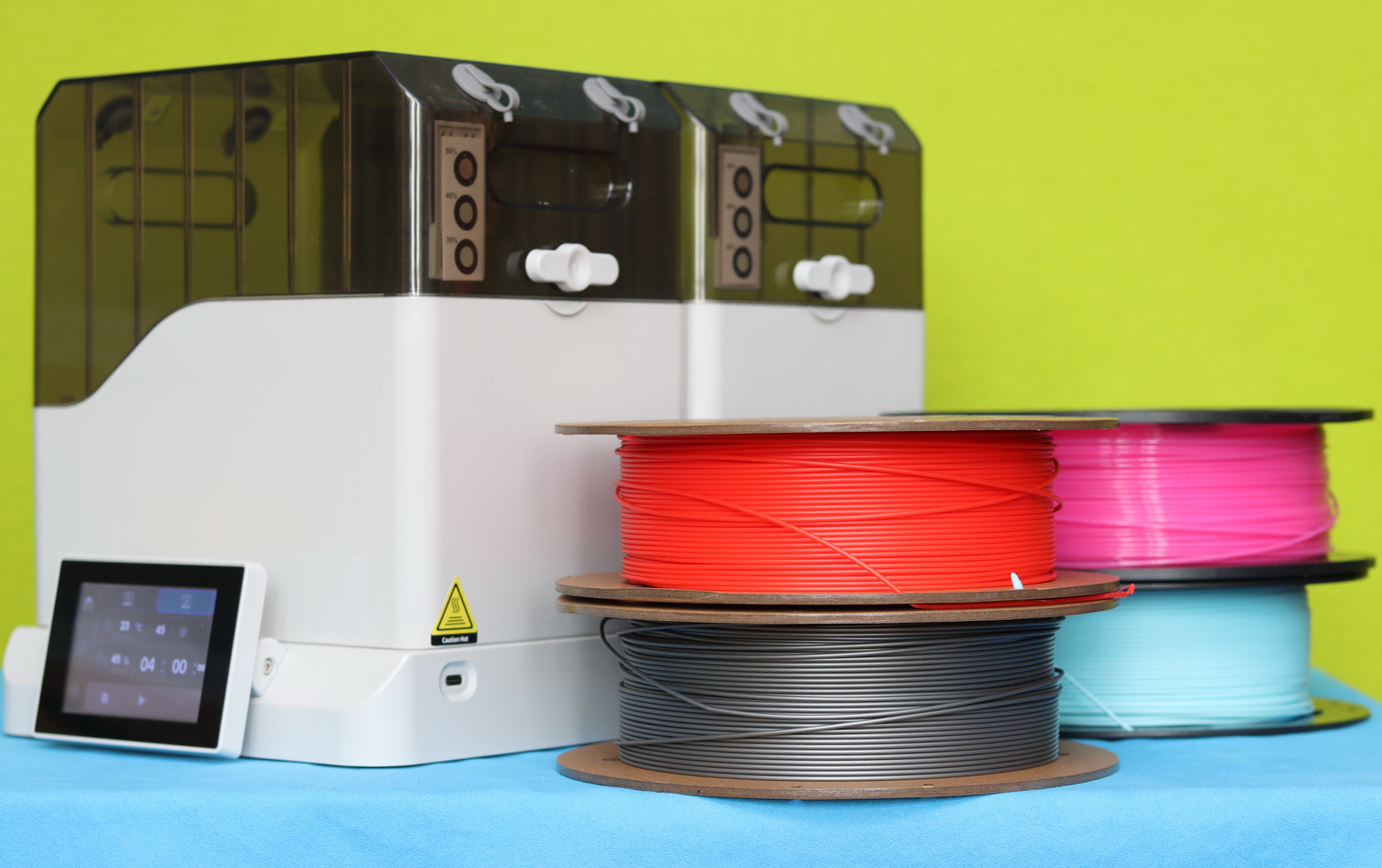
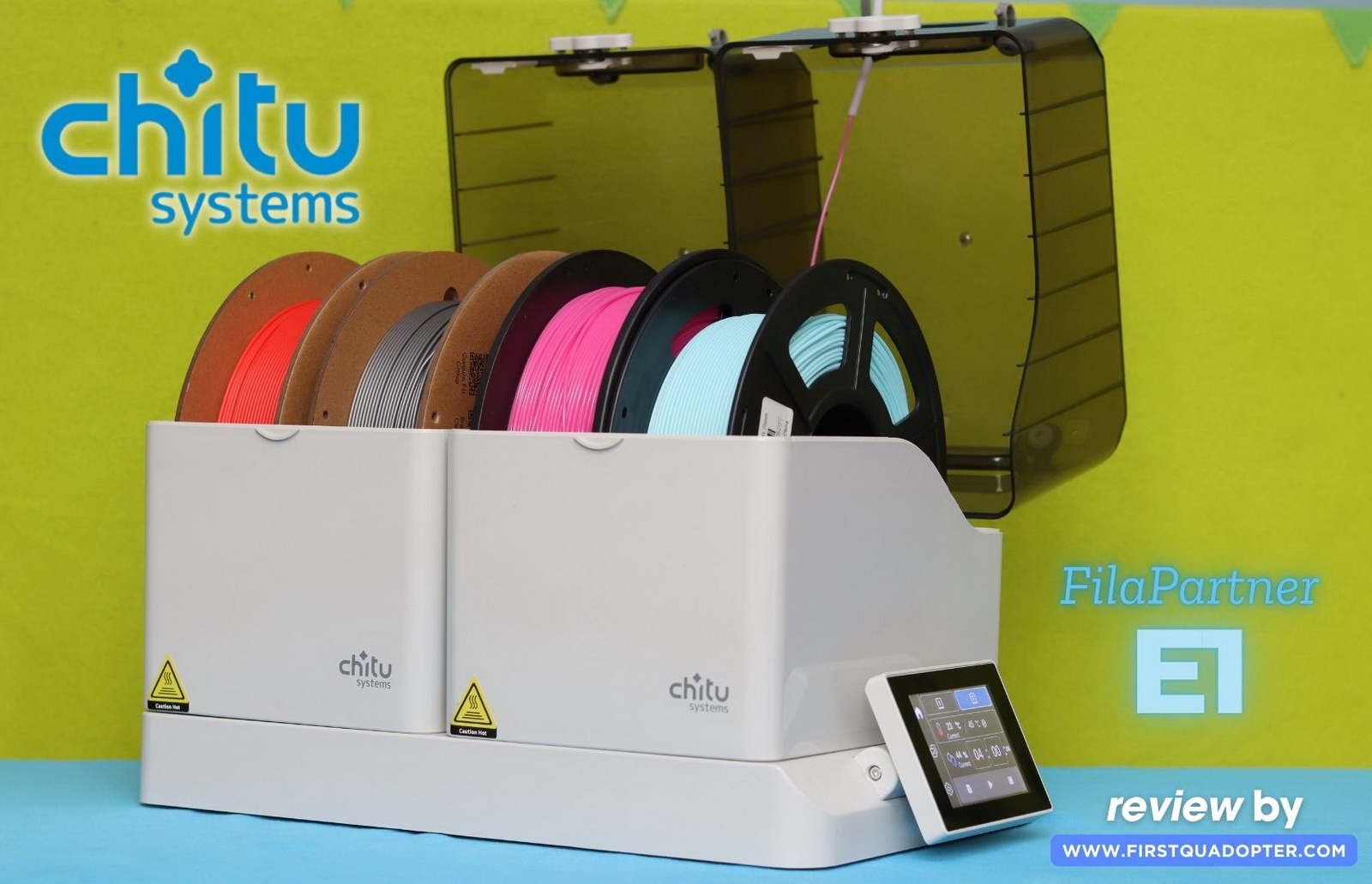
When I started with 3D printing, the first thing I learned was that the quality of the results depends not only on the machine’s performance, but also on the quality of the filament you use. A wet filament will perform poorly and produce ugly results—even on expensive 3D printers. The Chitu Systems FilaPartner E1, with room for up to four spools, features independent dual heating zones and “endless” storage containers, ensuring that your filament is always ready for use.
Moisture in filament can significantly compromise 3D printing quality, leading to issues such as inconsistent extrusion, bubbling, stringing, and poor layer adhesion. These defects reduce surface finish and mechanical strength, making parts unreliable. Hygroscopic materials—including PLA, PETG, Nylon, and TPU—are particularly susceptible because they absorb water from ambient air. When heated, this moisture vaporizes, creating voids and imperfections. The Chitu Systems FilaPartner E1 addresses these challenges by actively drying filament and maintaining a controlled environment, ensuring consistent material performance and superior print quality.
In a nutshell, most filament dryers operate on the same principle: they use a temperature-controlled heating element(s) and one or more fans to circulate air within the filament chamber, ensuring uniform drying. The FilaPartner E1 follows this approach but introduces a key advantage—removable chambers. This design enables users to dry multiple spools simultaneously or quickly swap out chambers for different materials, thereby improving workflow efficiency and minimizing downtime.
Chitu FilaPartner E1 review
Disclosure: I received this multi-filament dryer in a product review collaboration with ChiTuSystems. Product specs and quality may vary according to the manufacturer’s reliability, so I cannot guarantee that you will get the material that performs the same as seen in my article.
ChituSystems has established itself as a key player in the 3D printing ecosystem, offering both hardware accessories and powerful software solutions that streamline the printing process. Their product range, from resin vats and build plates to advanced slicing software like ChituBox, is widely appreciated for its precision and user-friendly interface. Their latest product is the PlateCycler C1M, an auto‑printing assistance kit for the Bambu Lab A1 Mini 3D printer that helps automate multi‑plate printing.
Over time, I’ve had the opportunity to review several of their offerings, and each has demonstrated a strong focus on reliability and innovation. Whether it’s their accessories that enhance printer performance or their software that simplifies complex workflows, ChituSystems consistently delivers tools that cater to both hobbyists and professionals in the 3D printing space.
Chitu Systems FilaPartner E1: Unboxed — First Thoughts
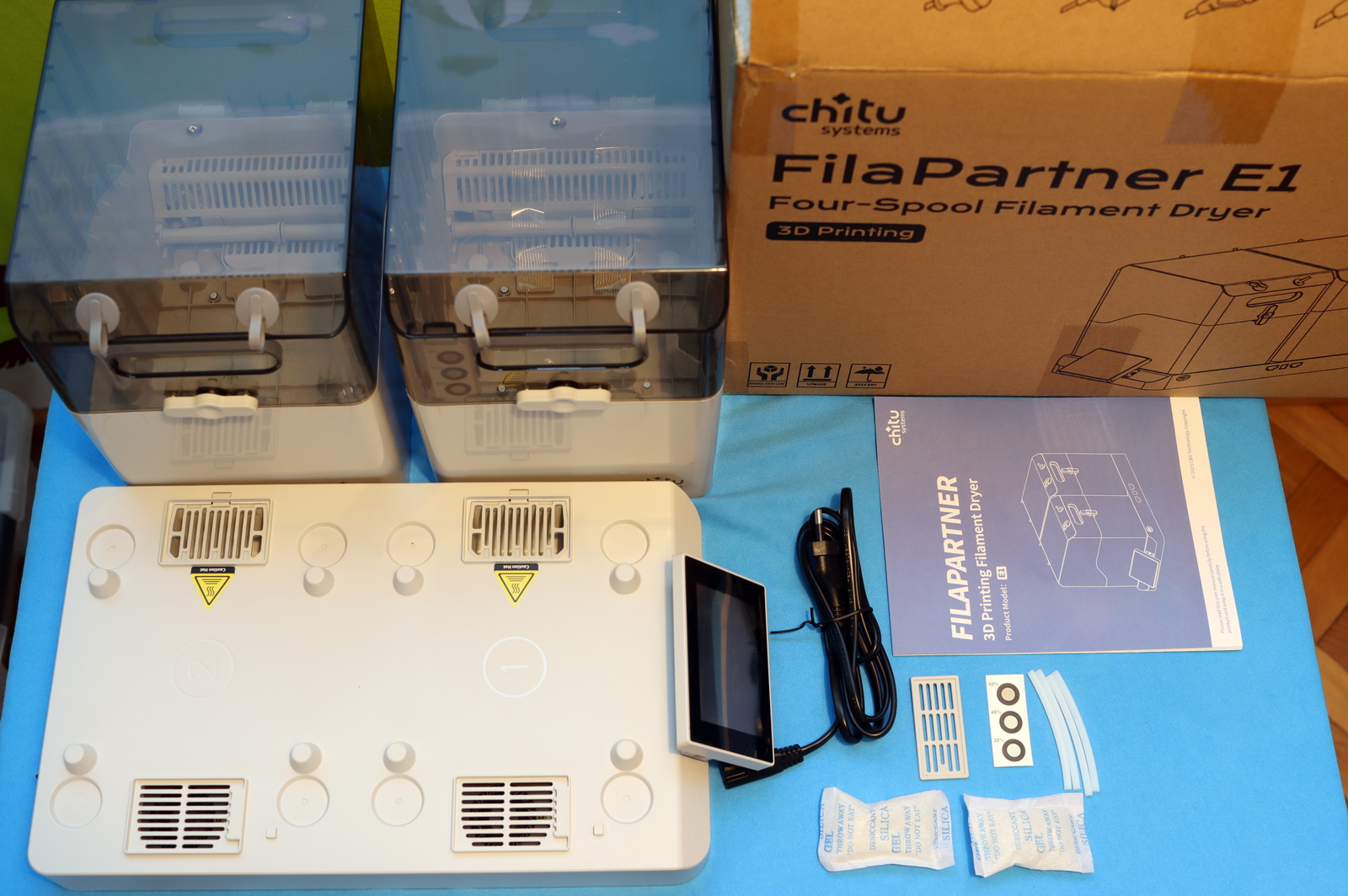
For extra protection, the FilaPartner E1 is packaged in a foam-padded cardboard box, which includes the following accessories:
- Dryer base unit
- Filament boxes x 2pcs
- Humidity indicator x 2pcs
- Reusable silica gel desiccant packets x 8pcs
- Magnetic baffle for air inlet and outlet x 4pcs
- Silicone tubes for filament outlet x 4pcs
- 220V AC power cord
- User manual
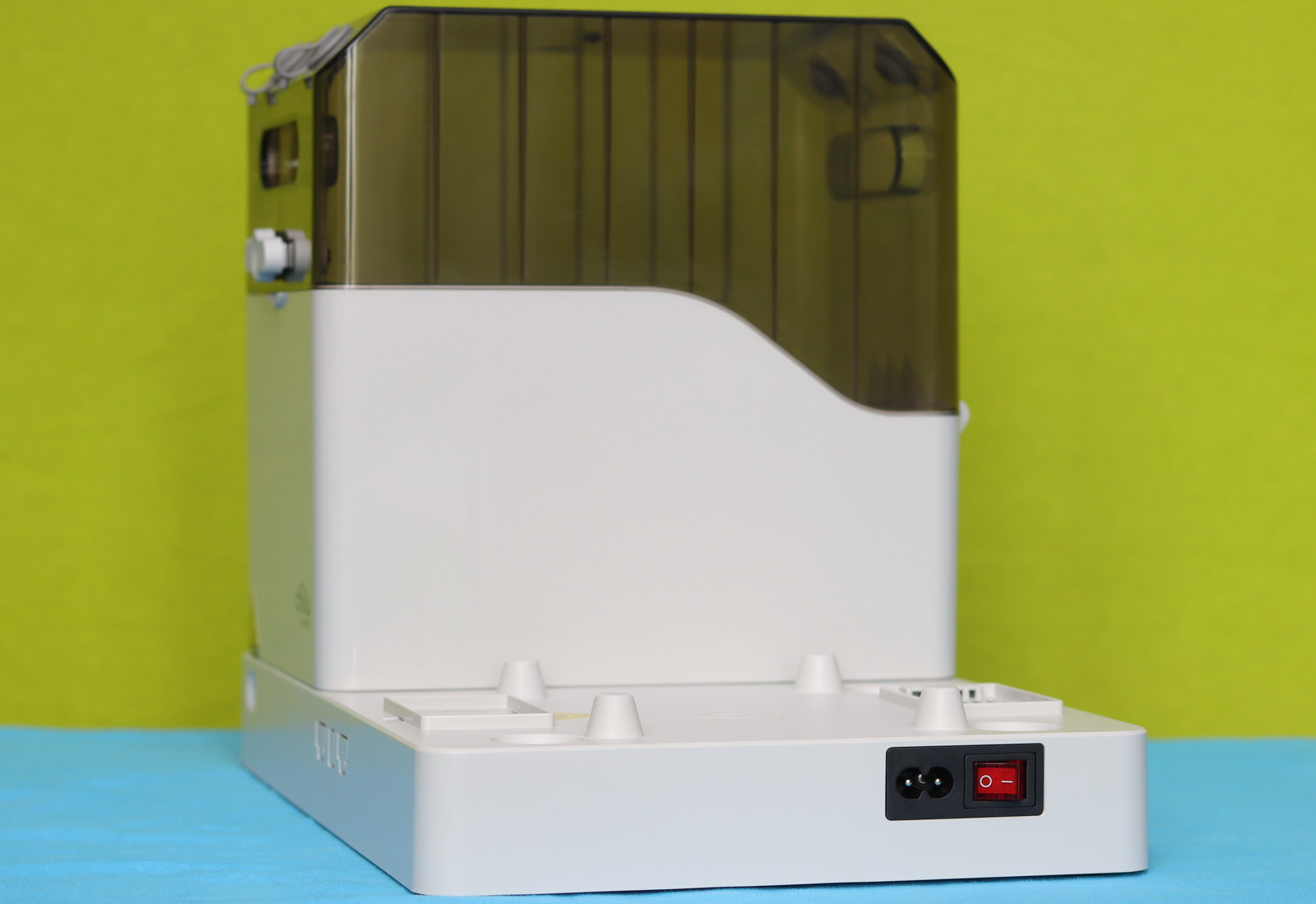
The Chitu Systems FilaPartner E1 features a modular dual-chamber design measuring 346 × 234 × 257 mm, while each drying container measures 234 × 161 × 217 mm. The aesthetic is clean and functional. The removable chambers are finished in crisp white, contrasted by smoky transparent flaps. This subtle contrast not only adds a modern touch but also provides clear visibility of the filaments inside, making it easy to monitor without opening the containers.
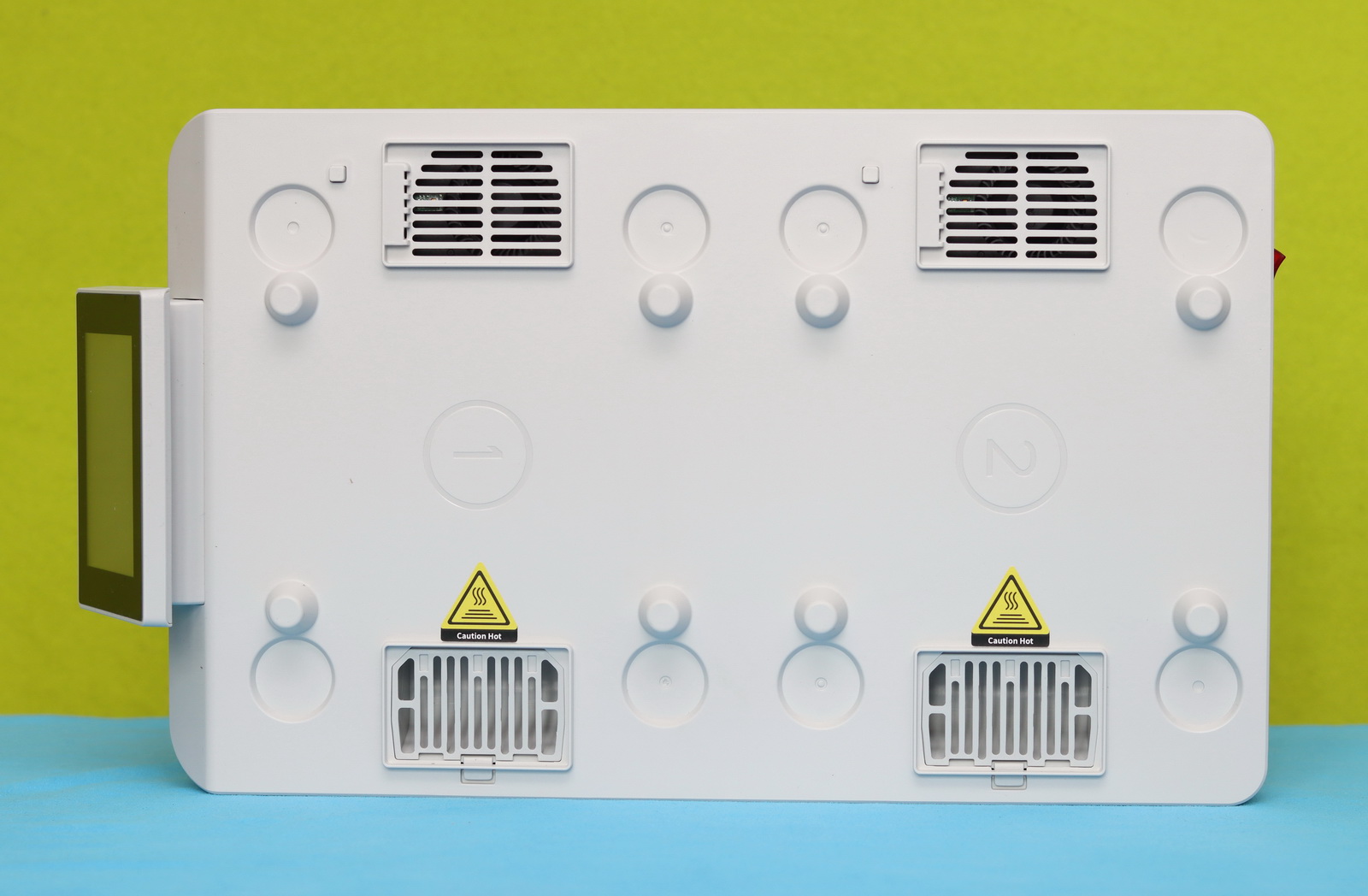
On top of the heating base, where the filament containers are installed, there are eight alignment pins (four for each container) along with small switches that detect the presence of a filament box. If a container is removed, the drying process stops automatically. Each zone has two air openings—an inlet and an outlet—clearly marked with warning labels indicating hot air.
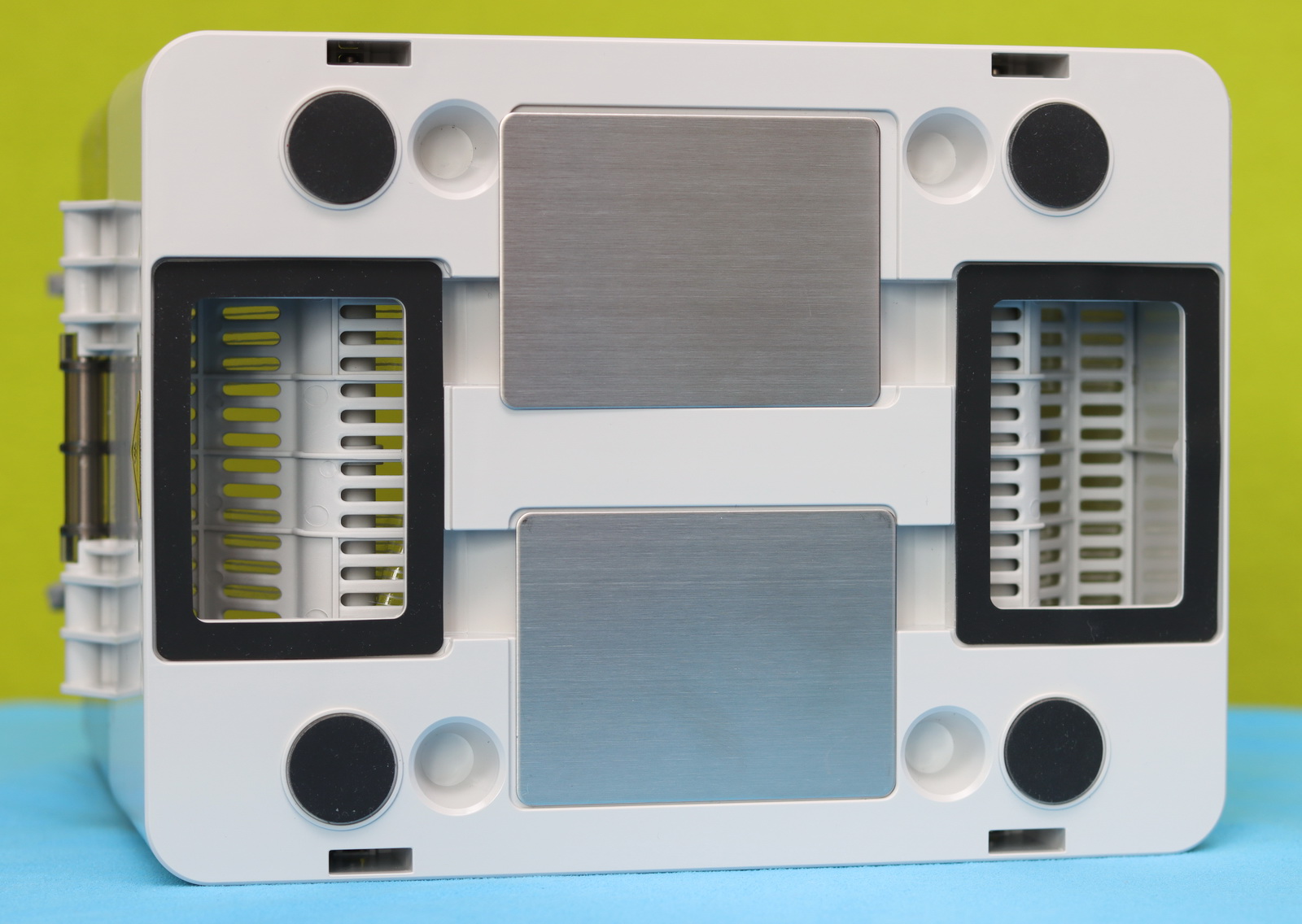
The base unit includes a USB Type-C port intended solely for firmware upgrades. I attempted to power the device through this port, but it did not start. At the rear, the unit is equipped with an AC power socket and a dedicated power switch. On the front, there is a 3.5-inch resistive touchscreen. The LCD screen is tiltable but not flippable, which means accessibility may be limited depending on the viewing angle.
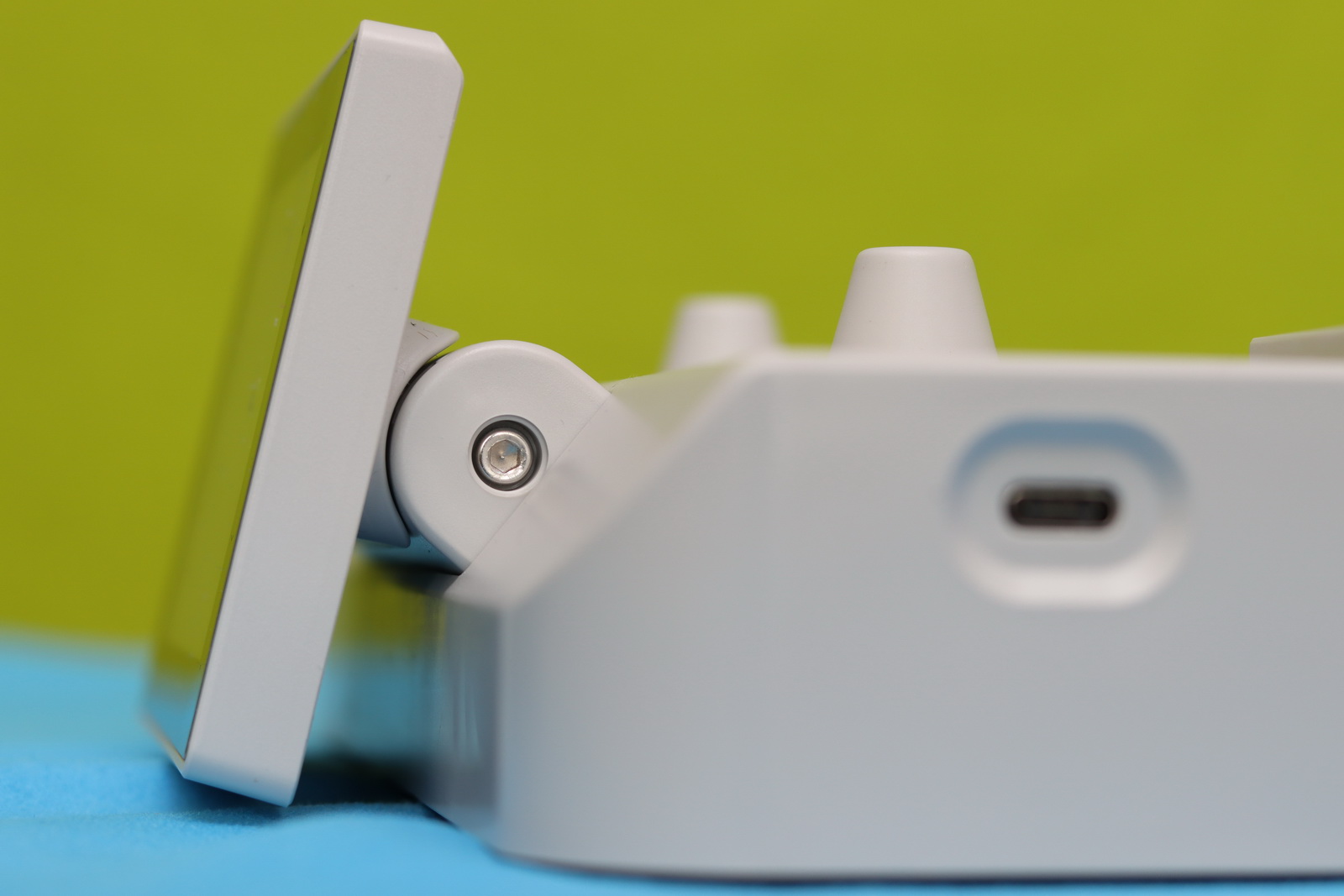
Modular design with removable filament containers
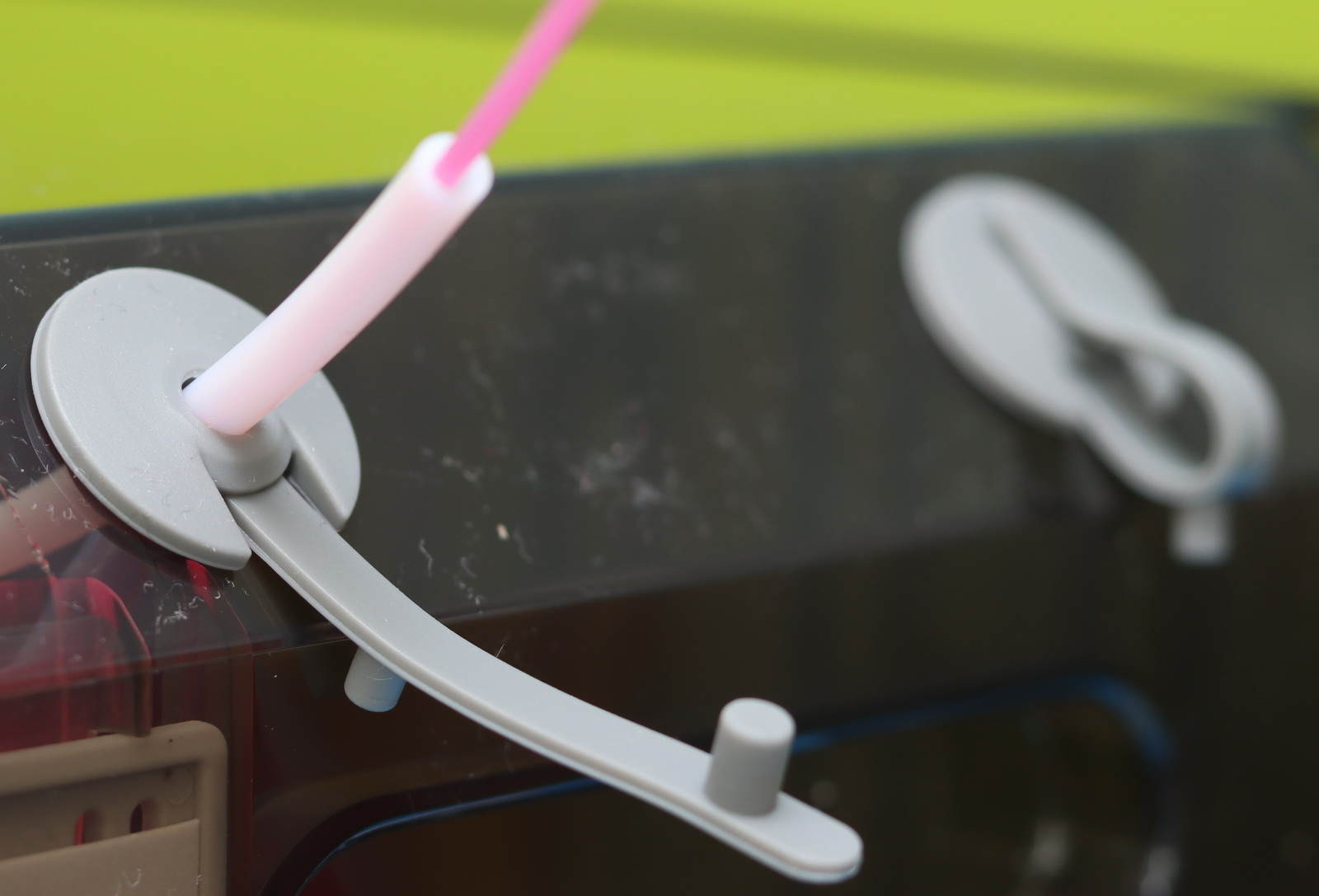
Each chamber is designed to hold two 1 kg spools and features four integrated filament outputs, allowing you to run prints directly from the box without the need to transfer spools. This setup ensures a clean, organized workflow and helps maintain optimal filament conditions during use. The containers have a closing knob in front to secure the flap.
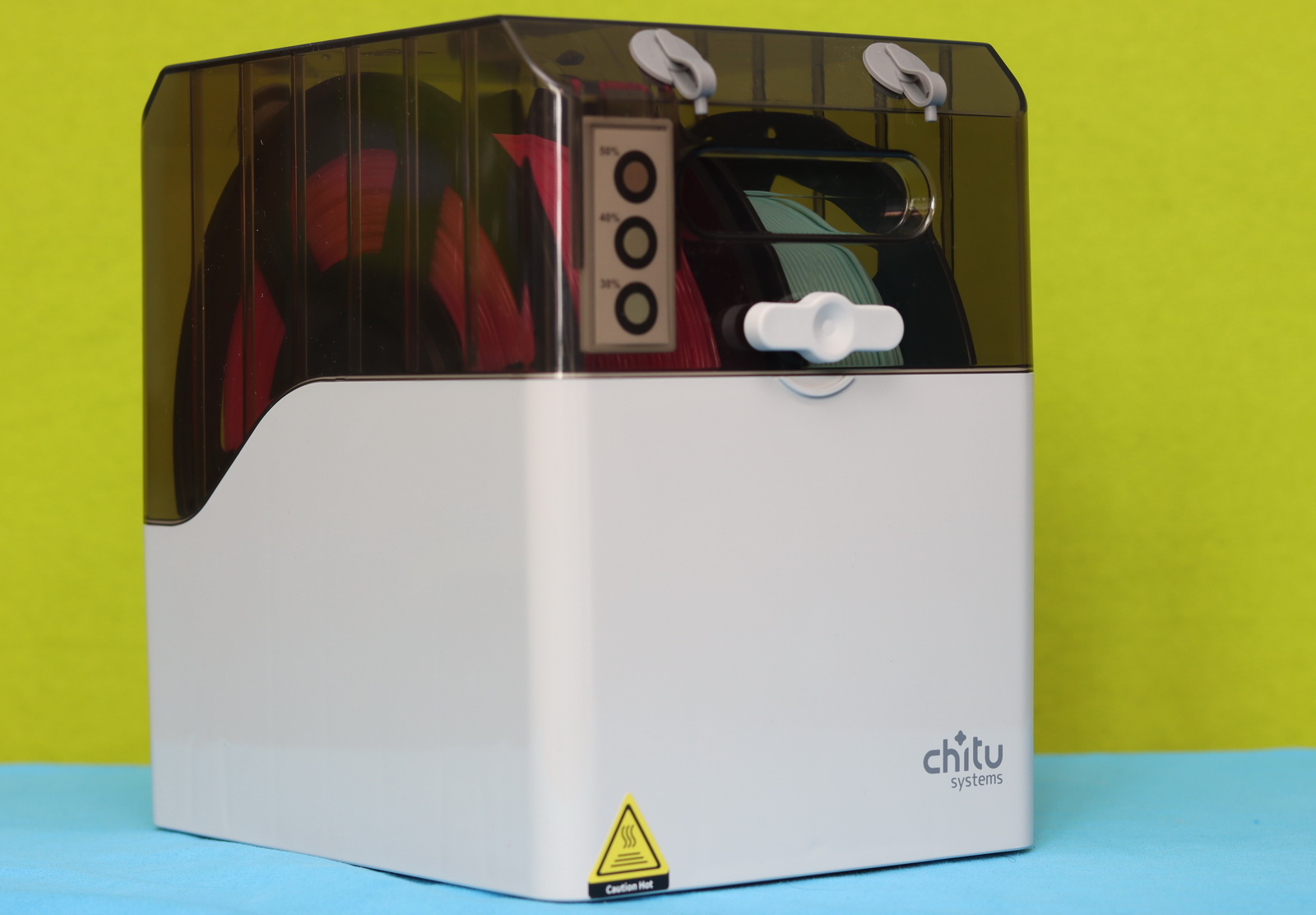
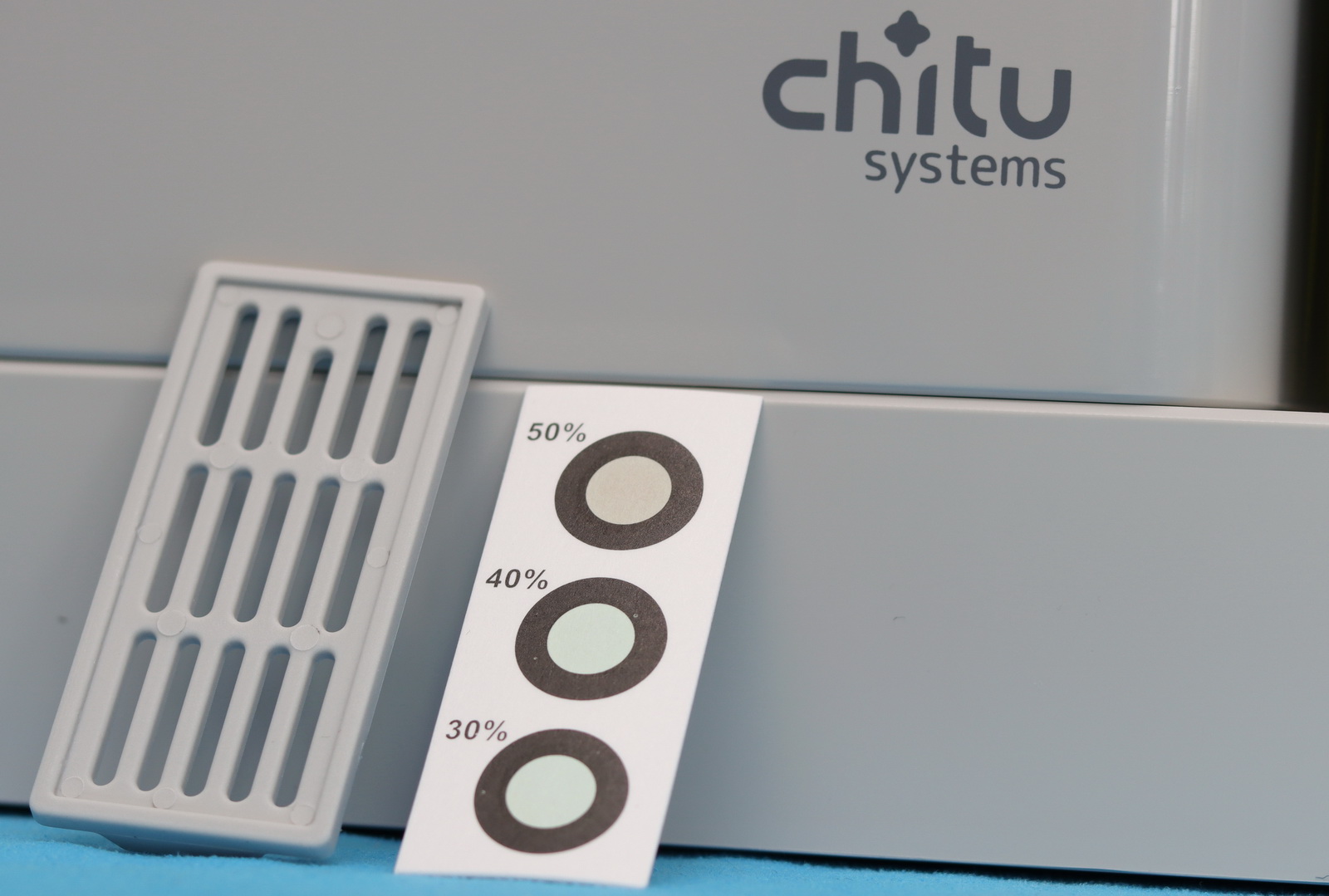
Inside the box are two spool rollers with bearings to ensure smooth running. Beneath them, there is a dedicated bay for a silica gel desiccant packet. Each container also includes a pre-installed traffic-light–style humidity indicator card (three spots: 30%, 40%, and 50%).
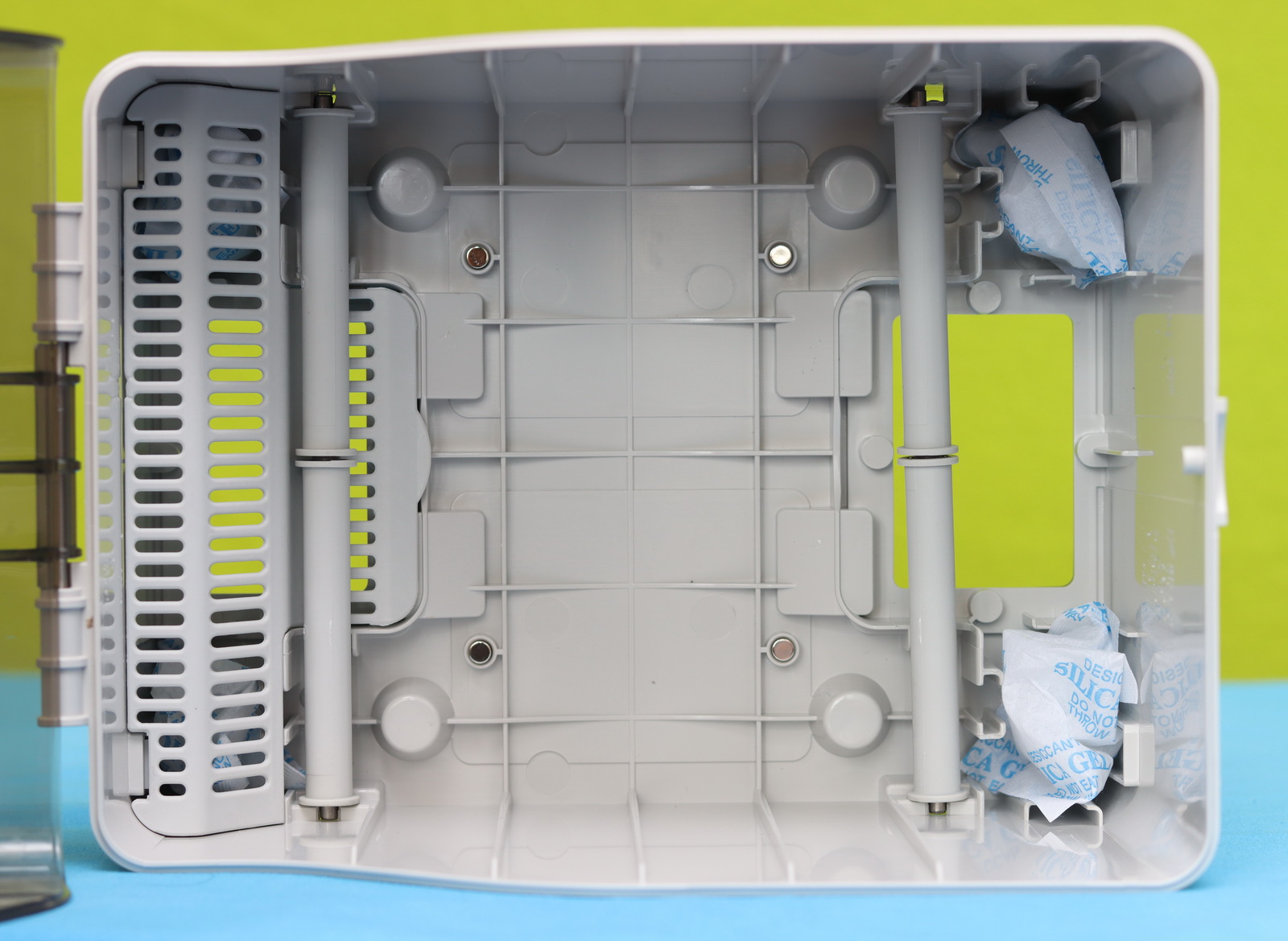
When used for storage, two magnetic metal plates close the air holes, preventing humidity from entering. The filament output holes can also be covered with integrated rubber caps.
How to Use the Chitu Systems E1 —Effortless, Intuitive, Precise.
Filament dryers are basic devices designed to generate a 360-degree hot airflow around the filament, with the purpose of removing excess moisture from the material. It’s important to provide precise temperature adjustment and monitoring during the drying process.
In the settings menu, you can toggle between °F and °C for the temperature unit, change the system language, adjust the screen-off timer, and check the firmware version. You can also enable features such as automatic drying, silent mode, and filament box detection.
As mentioned, the FilaPartner E1 features two heating zones that can be configured with individual parameters (timer and temperature). You can load, for example, container “1” with two PETG spools and set a 6-hour program at 60 °C, and container “2” with two PC spools and set it to 70 °C for 16 hours. There are preset recommended settings for the most common filaments, but you can also adjust them freely to suit your specific needs.
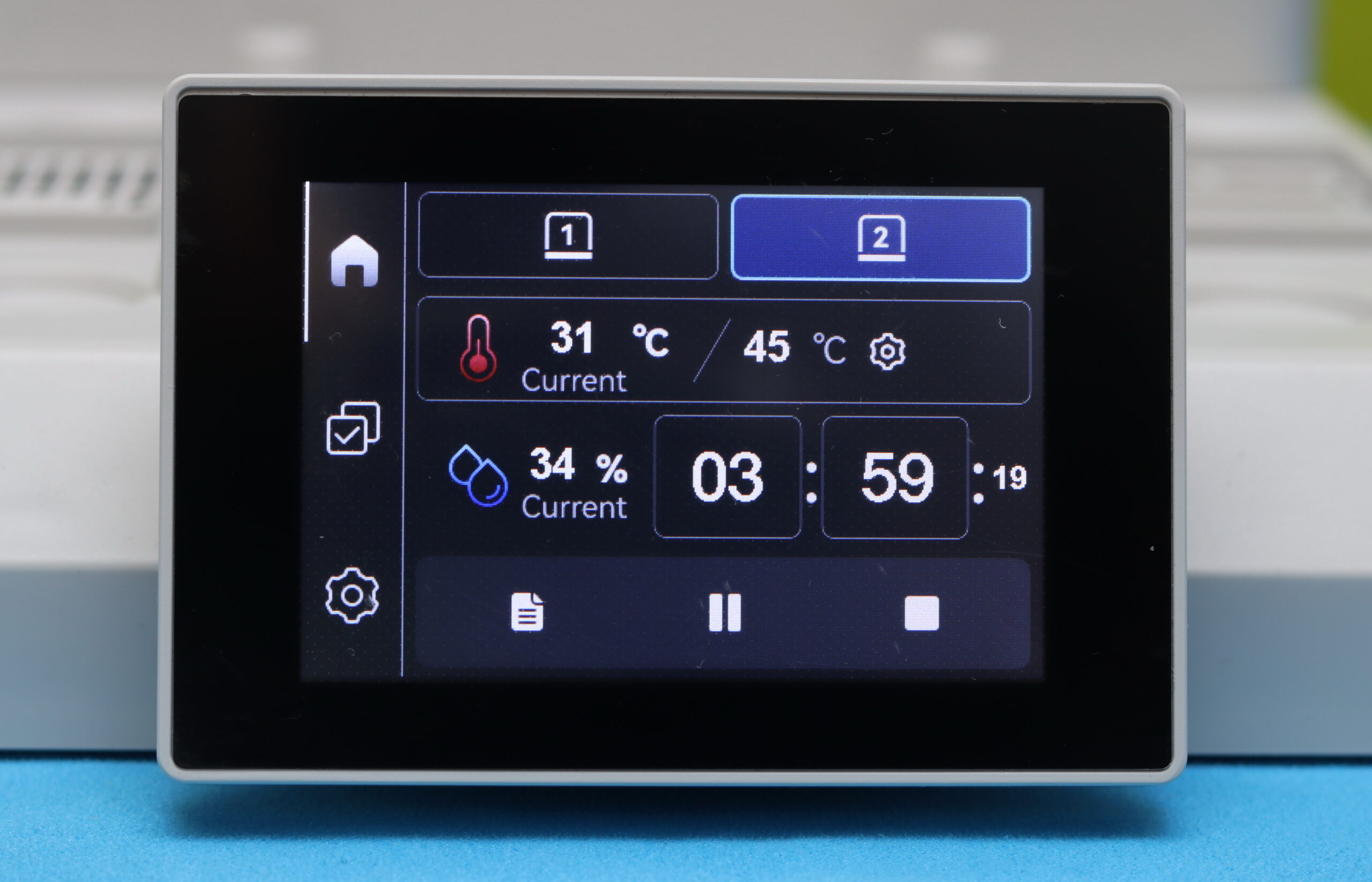
During the drying process, the status screen clearly displays the current temperature and humidity, along with the set temperature and the remaining time, making it easy to monitor progress at a glance.
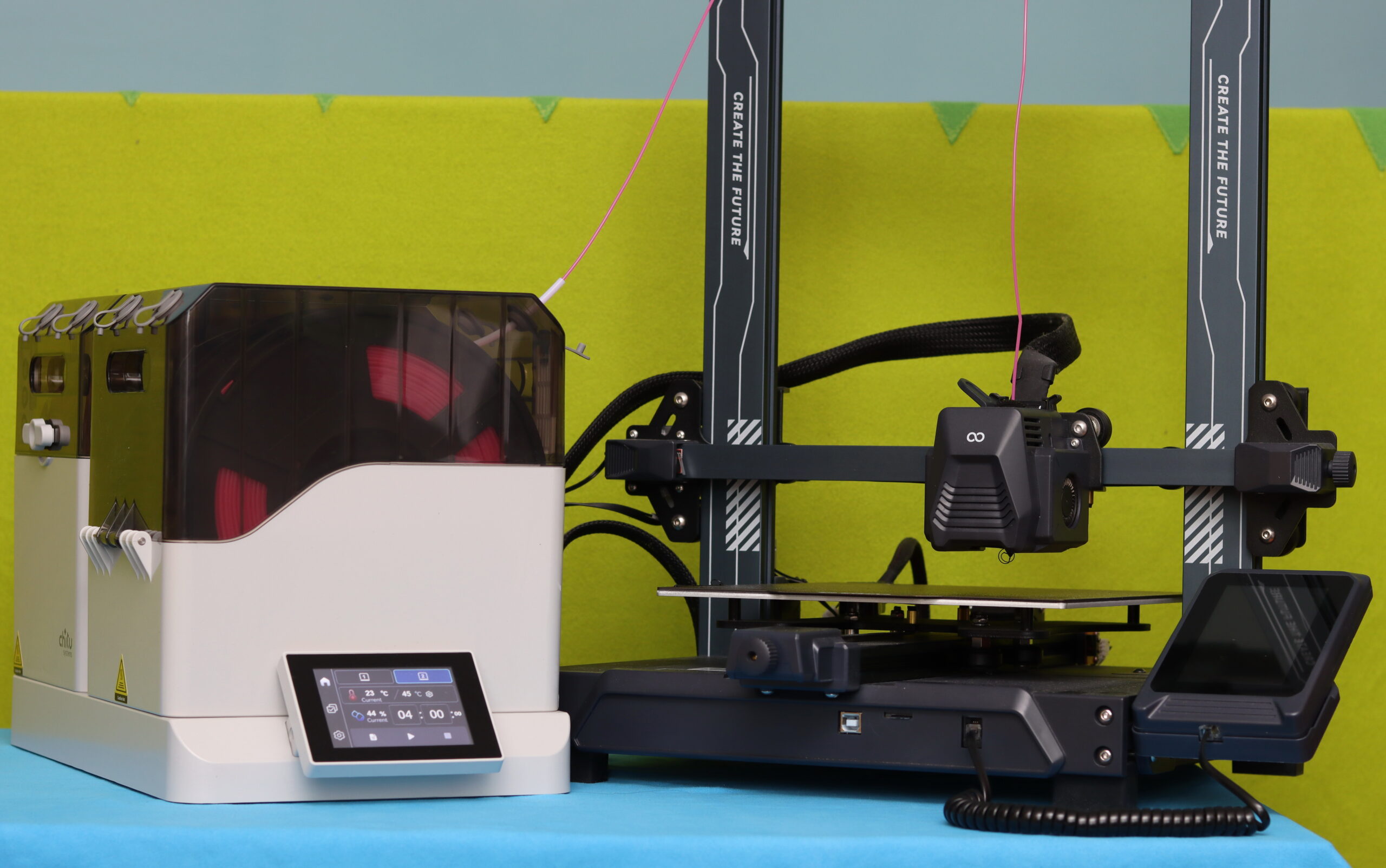
I can’t really say that the FilaPartner E1 dries filament better or faster than my existing filament dehydrator. In fact, it’s difficult to significantly speed up the drying process at all, since increasing the temperature too much can easily lead to material damage.
What is certain, however, is the noticeable difference between the filament before and after drying. I tested the unit with a spool of PLA that had been opened about a year ago and left unsealed in its original bag. Before drying, I experienced adhesion problems and heavy stringing. After drying the filament for five hours, those issues were completely gone, and the print quality improved dramatically.

Overall, the device operates very quietly. During normal operation, I measured a noise level of approximately 50 dB, which is comparable to a quiet office environment. This low acoustic output makes it well-suited for continuous use in workspaces, laboratories, or home settings without causing distraction or discomfort.
Pricing and availability
The FilaPartner E1 was officially released in August 2025 and is available for order on the manufacturer’s online store for $139.00. This price includes the base unit and the drying chamber. Additional drying boxes are available for $39.00 each. At the time I published my review, the status was listed as “Pre-order,” with an expected shipping date in mid-December.
Key features
- [One unit, two chambers, four drying zones, and virtually unlimited filament storage] Designed for makers who need efficient organization and continuous printing without compromise. You can run four 3D printers directly fed from the FilaPartner E1, or even multicolor machines.
- [Dual individual Temperature Chambers] Precise Heating Control for Mixed-Material Filaments. Each chamber is powered by its own PTC heater, and can be independently set from 45-70 degrees Celsius, perfect for high-performance users switching between PLA, TPU, ABS, PETG, or PA-CF filaments
- [Automatic Drying] The E1 dryer box has a high-precision humidity sensor and displays the humidity inside the box in real time. Even when the filament dryer is in standby mode, it automatically activates when the humidity inside the box reaches or exceeds 50%, preventing secondary moisture exposure. This means it can also serve as your filament storage box.
- [Intuitive 3.5″ Resistive Touchscreen] Easily monitor and control drying temperature, humidity levels, and operation modes with a bright touchscreen interface
Technical parameters
| Dimensions: | Product size: 346x234x257mm Filament box: size: 234x161x217mm |
| Number of spools | Up to four |
| Power rating | 240Watt |
| Settable temperature range | (0℃ to 70℃) |
| Number of heating units | Two |
| Filament compatibility | PLA, PETG, TPU, ABS/ASA, PA, PC, and other |
The table below shows the recommended temperature settings according to the filament type.
| Material | PLA/PLA+ | PETG | TPU | ABS/ASA | PA|PC |
| Temperature | 70℃/122°F | 60℃/140°F | 60℃/140°F | 69℃/149°F | 70℃/158°F |
| Drying time | 6H | 6H | 12H | 8H | 16H|8H |
Four Spool Filament Dryers: Alternatives to FilaPartner E1
The FilaPartner E1 is not the only, not even the first four spool filament dryers. If you check Amazon, you will find at least five models priced between $66 and $199: Creality Space Pi X4, Sovol SH03, Sunlu S4, Caydo, and BIGTREETECH ViViD. What makes the E1 unique is its removable chamber system. As noted in my Sunlu S4 review, that unit features a unibody design with a single built-in chamber, similar to the rest of the contenders. Even if you only want to dry one spool, the entire box will still be heated.
The heating power of a filament dryer determines its efficiency and drying time. While the FilaPartner E1 is rated at 240W, some models feature heating elements of up to 350W.
Priced at just $65.99, the SH04 is probably the most affordable four-spool filament drying unit—and arguably the ugliest. It looks like a microwave from the 1980s that’s been through a time warp.
You Can Trust Our Reviews!
Since 2014, FirstQuadcopter has thoroughly reviewed, tested, and rated hundreds of products, including drones, gimbals, power stations, action cameras, 3D printers, video lights, and other high-tech gear to help you make better buying decisions.
We don’t do paid reviews or agree to affiliate links. All products are tested fairly and equally, and if anything changes over time, I will update the written reviews.
As always, if you found this review helpful, don’t forget to like, share, comment, and bookmark for more content like this!