

Walksnail has recently released an upgraded version of its most powerful video transmitter — the Avatar GT2 VTX. Boasting a maximum output of 2 watts (2000 mW), it’s clearly designed with ultra-long-range flights in mind.
What I’ve learned in 20 years in this hobby is that higher TX power doesn’t always translate into longer range or better penetration. It’s just as important to match the antenna types on both ends and to reduce RF noise throughout the drone. For example, a badly positioned VTX antenna can interfere with the radio antenna, so what you gain on one side, you lose on the other.
In this review, I’ll try to reveal whether it’s worth pushing that much power… and who actually needs what is essentially a “French bread toaster” strapped to their FPV drone. The second-generation GT claims to have lower power consumption. They reduced the maximum power usage from 24W to 16W, but it still requires active cooling, making it quite bulky compared to other digital VTXs.
Walksnail Avatar GT2 Review
Disclosure: I received this long-range Walksnail Avatar kit as a product review collaboration with CaddxFPV. Product specs and quality may vary depending on the manufacturer’s reliability, so I cannot guarantee that you will get a unit that performs the same as in my review.
Usually, partners contact me first regarding review cooperations. However, with the new GT2, I reached out to CaddxFPV to see if they’d be willing to send me a kit for testing. My Avatar Goggles X had been sitting unused for a while, and I was honestly afraid of getting a bit rusty :). They positively accepted my request and offered a sample unit.
I planned to install it on one of my 5-inch frames, but I was told that, due to the VTX’s size, it is better suited for 7-inch or larger drones. Designed with long-range flying in mind, it is particularly well-suited for fixed-wing aircraft and VTOL platforms.
At a glance
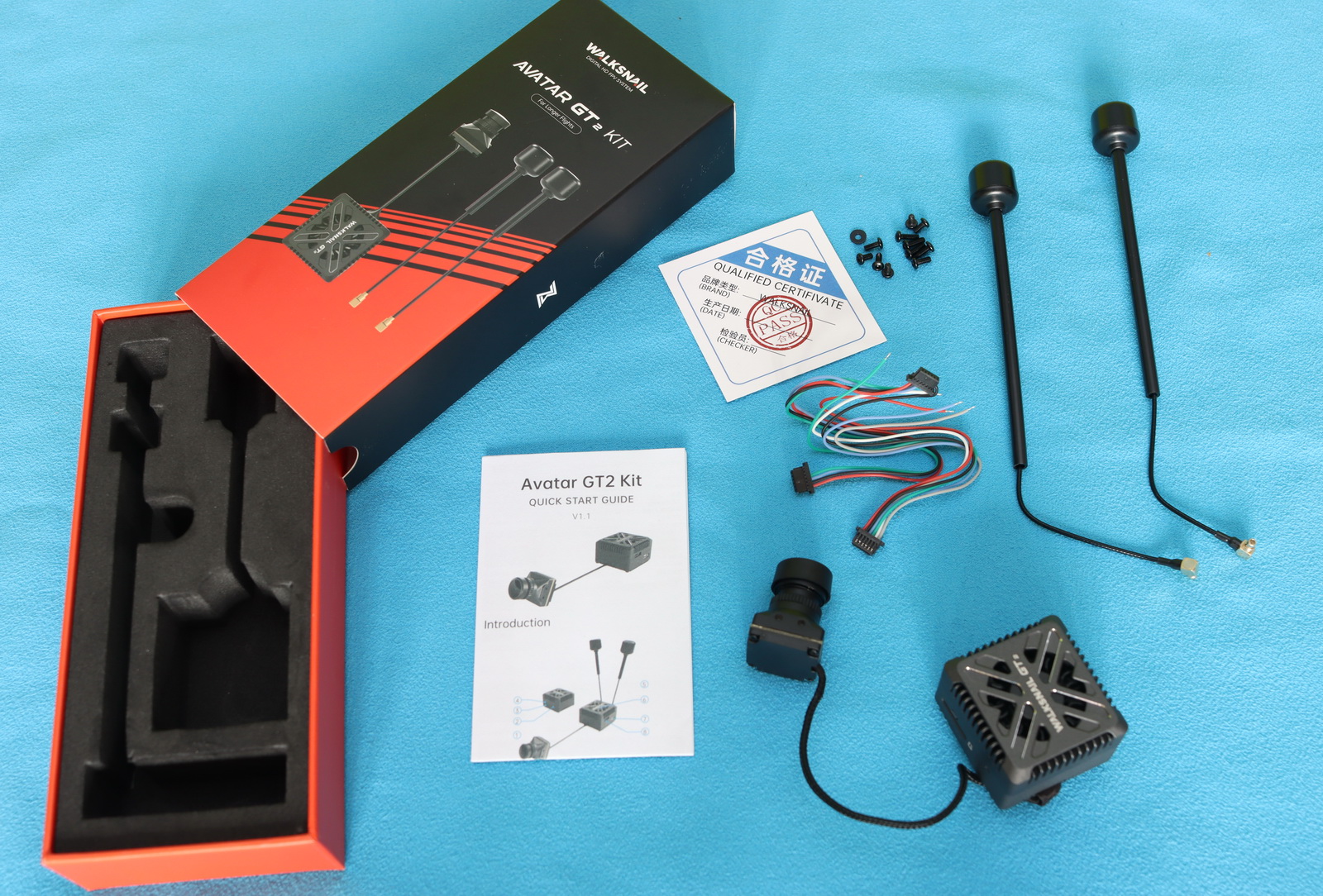
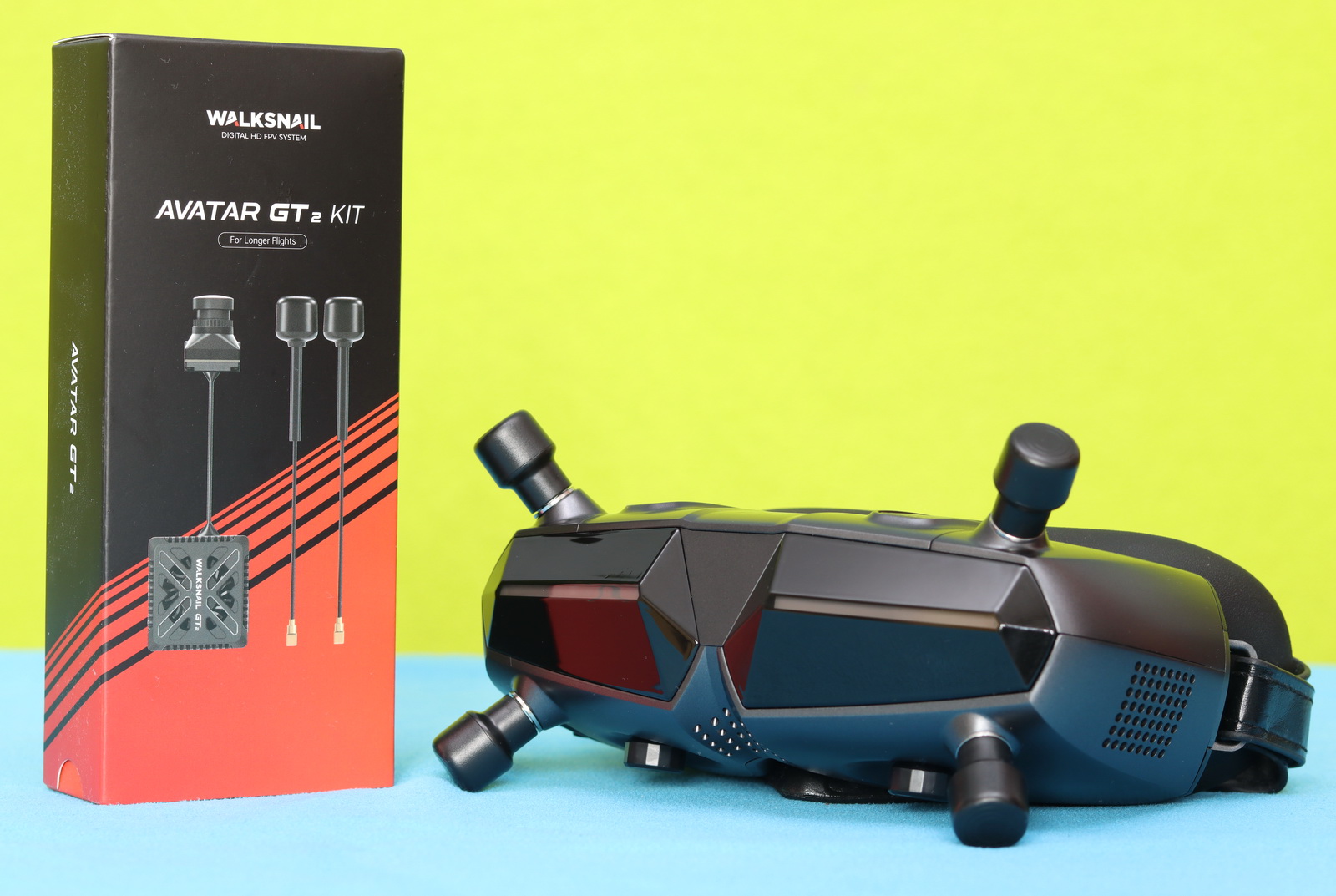
The AVATA GT2 kit comes in the same black and red as all previous Walksnail products I reviewed. The box includes the digital VTX, Avatar Pro camera, two antennas, two VTX-to-FC cables (one with plugs abd one for soldering), a pack of mounting screws, and a user manual.
The VTX measures 34 × 36 × 23.5 mm and weighs 52 grams. It supports both 25.5 × 25.5 mm and 20 × 20 mm mounting patterns, allowing it to fit a wide variety of frames. The Avatar Pro camera measures 19 × 19 × 24 mm and weighs 9.5 grams. A 140 mm cable connects the camera to the VTX, which should be long enough for most builds.

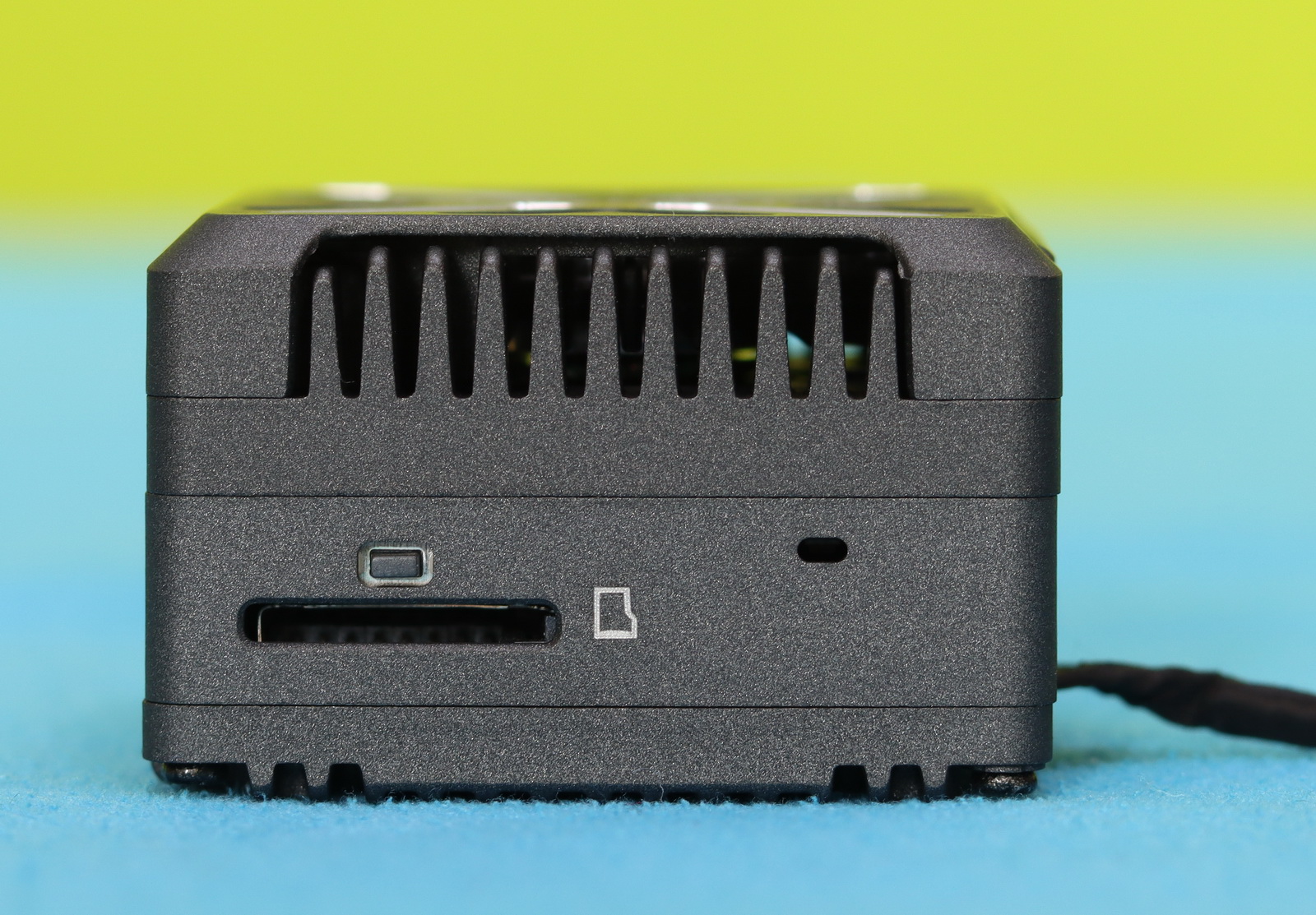
The case of the unit has been redesigned and looks more integrated. It is made of metal, which further helps with heat dissipation, in addition to the active fan cooling. One side hosts the micro SD slot and the bind button, and the other one the FC connector and Type-C port. There is no internal memory, like in the case of the Avatar HD Pro, which has 8GB or 32GB internal memory.
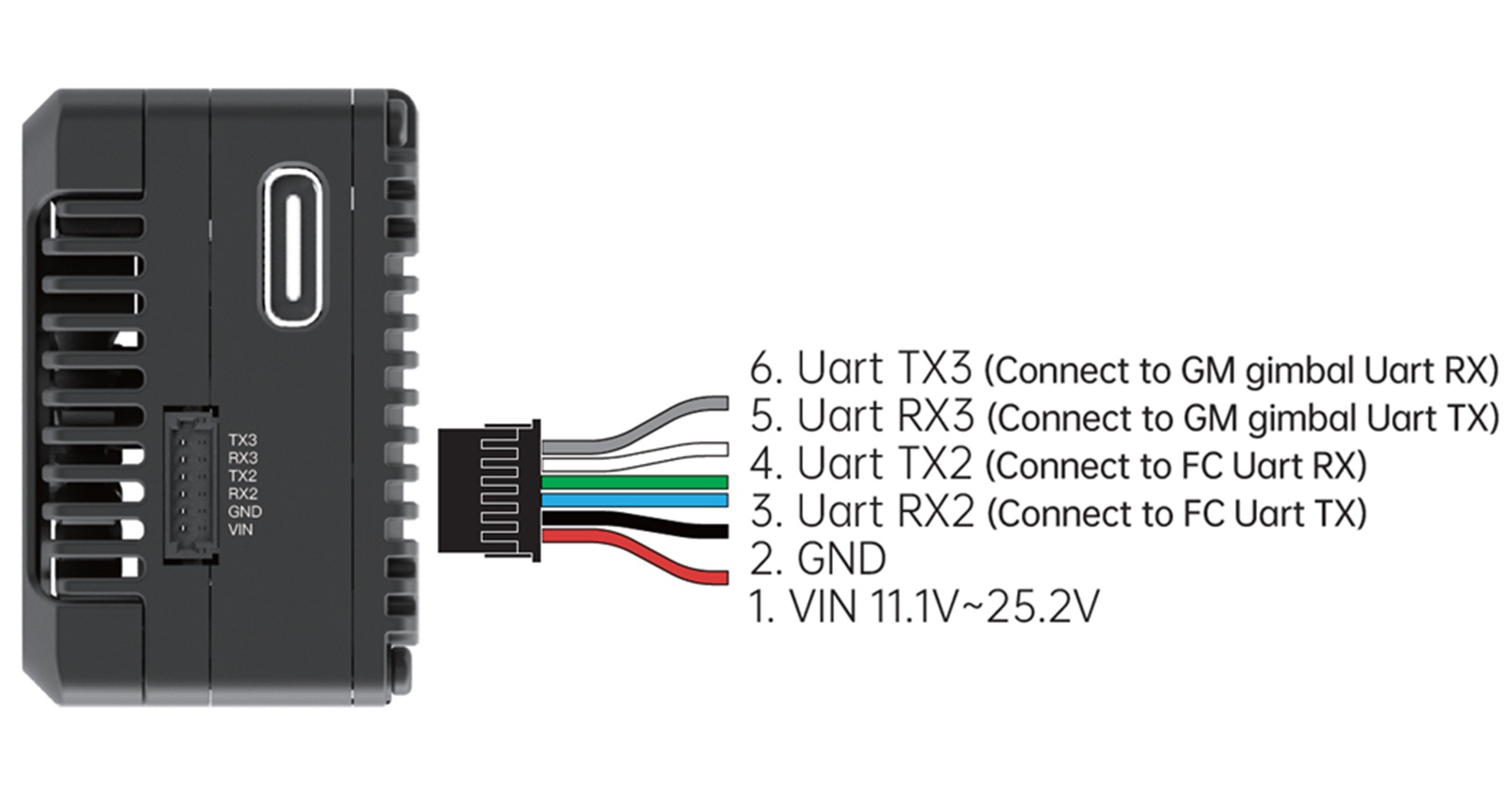
One of the most attractive features of the Walksnail Avatar system is its native gimbal compatibility, which enables a truly immersive flight experience. The flight controller (FC) connector includes, in addition to the standard pins (power input 11.1V–25.2V, GND, and RX2/TX2 FC UART), a TX3/RX UART port specifically intended for controlling GM gimbal movement via head tracking. This integration adds a new level of control and realism to the overall FPV setup.
Key features
- 20km Range & 22ms Latency: Integrated design delivers stable digital HD video transmission up to 20km with low 22ms latency for precise, real-time control.
- Dynamic 2W Output & Frequency Hopping: Automatically adjusts power up to 2W and switches channels in milliseconds to avoid interference, ensuring an uninterrupted signal anywhere.
- Active Cooling & 30% Lower Power: A built-in cooling fan and optimized algorithms reduce power consumption by over 30%, effectively minimizing thermal throttling during extended flights.
- Immersive Head Tracking: Responds to your head movements instantly when paired with compatible goggles and gimbals, providing a true cockpit feel. No soldering required.
Pricing and availability
The new Avatar GT2 kit is now available for purchase directly from the Caddx website, priced at $199, making it a solid option for anyone looking to upgrade or replace their current setup. For those who have experienced a crash and ended up damaging their camera, there’s also a more affordable replacement option available: the Avata HD Pro camera, which costs around $65. This makes repairs relatively accessible without needing to invest in a full kit again, helping users get back in the air quickly and at a lower cost.
My Experience with the Avatar GT2: “Problems”, Lessons Learned, and Observations
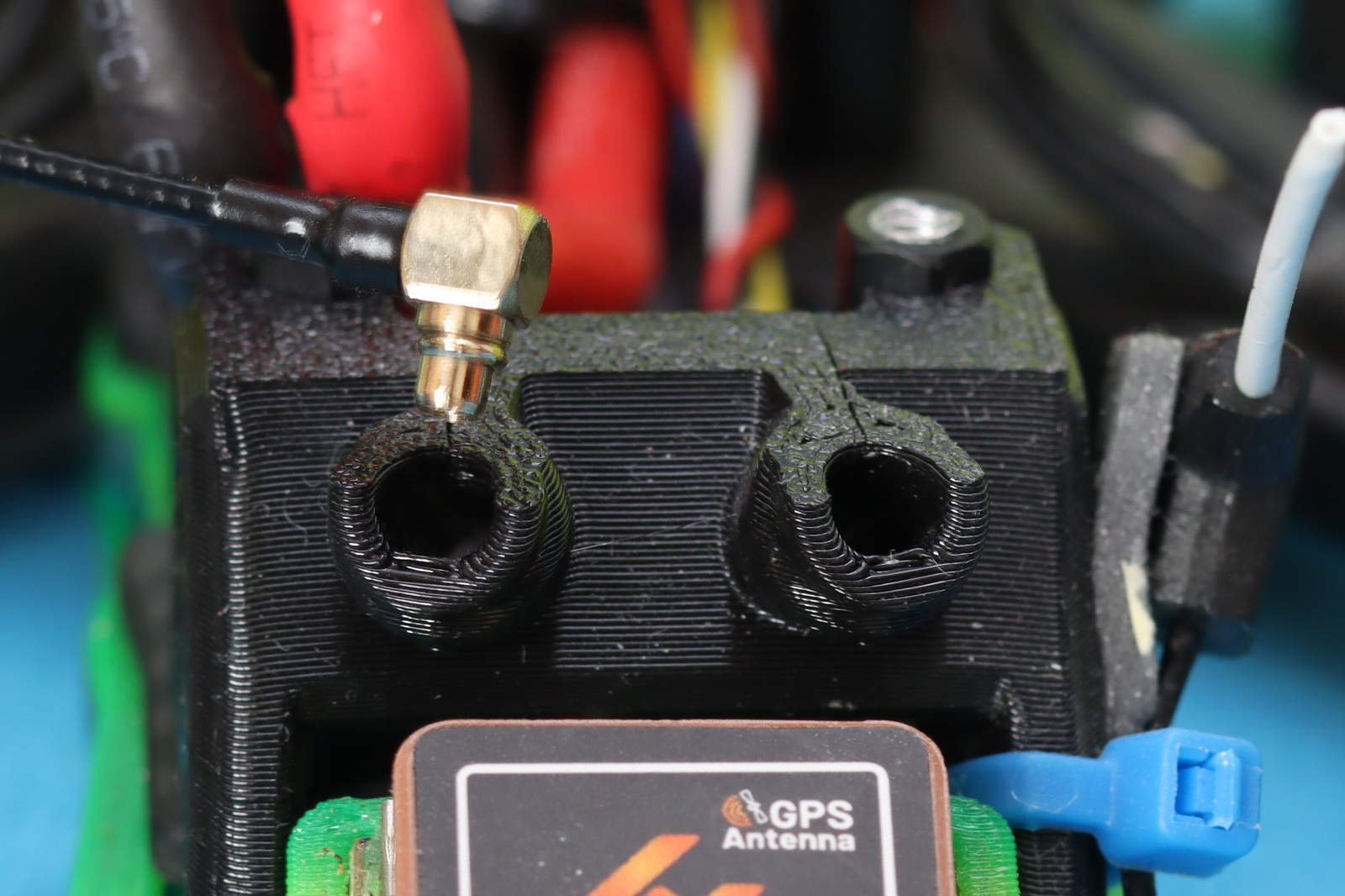
CaddxFPV warned me that the Avatar GT2 isn’t designed for every build. Besides the VTX being relatively thick, it also requires adequate clearance on all sides—particularly above it—to maintain proper airflow and ensure the built-in cooling fan can perform at its best. Having available only the Volador II VD6 frame, I need to partially cover the top part. During installation, another problem I encountered was related to the robust MMCX antenna connectors, which were difficult to route through the TPU antenna mount designed for the smaller and more commonly used I-PEX / U.FL (micro coax) connectors.
After everything was mounted on the drone, I powered on both the drone and the VTX to check that everything was working correctly. My goggles were running firmware 39.44.5, while the GT2 was on 39.44.15, and there was no OSD. As the Goggles X warned me about the firmware mismatch, I decided to upgrade the VTX firmware (which later proved to actually be a downgrade). After several failed attempts at flashing the firmware, I quit and proceeded to troubleshoot the second issue.
A missing OSD is usually caused by an incorrect Betaflight configuration or missing RX/TX wiring. After double-checking everything, I still couldn’t get the OSD to appear.
I decided to contact CaddxFPV to get their input on the issue. They responded within a couple of hours and informed me that firmware version 4.15 was the latest available release. Since firmware downgrades are not supported on the VTX, they recommended updating the software on the Goggles X instead. They also suggested following the Walksnail FCC unlock procedure available on their website, which unlocks the full 2W power mode.
After following their recommendations, the GT2 finally worked as it should. As it turned out, all the problems were caused by a mistake on my part. Somehow, I had convinced myself that version 39.44.5 was newer than 39.44.15. Update: two days later, Walksnail published the 39.44.18 firmware with the following improvements and fixes:
New Features
- Added support for 720p50 and 1080p50 on Goggles X HDMI input
- Upgraded Goggles X HDMI chip firmware to support switching between 720p and 1080p
Modifications / Optimizations
- Fixed no .osd file was recorded in the airunit DVR
- Optimized the display of the signal bar division mechanism
- Resolved the GUI showing “Choose a Channel” when frequency hopping is enabled
- Removed the behavior where Goggles X lights up a green LED for 1 second during the boot stage
Avatar GT2 Test Setup
The range (maximum flight distance) of your FPV drone/UAV depends primarily on the radio control system and, secondly, on the video transmission range.
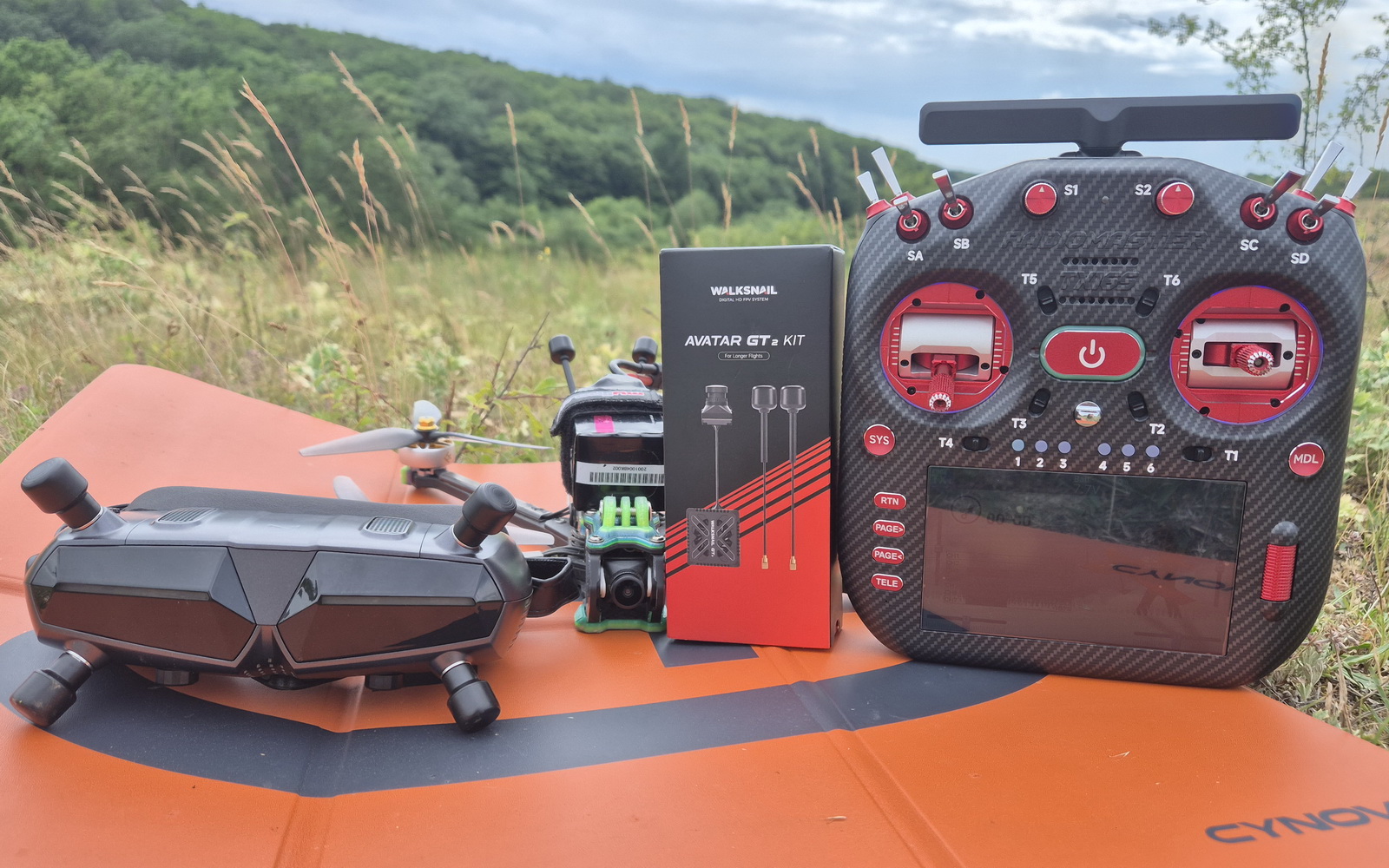
However, several other factors also play a significant role in determining the effective range, including antenna quality and orientation, environmental conditions (such as obstacles, interference, and terrain), as well as the overall configuration and tuning of the system.
In practice, achieving the maximum advertised range requires optimal conditions, including clear line-of-sight between the transmitter and the drone, minimal signal interference, and properly calibrated equipment.
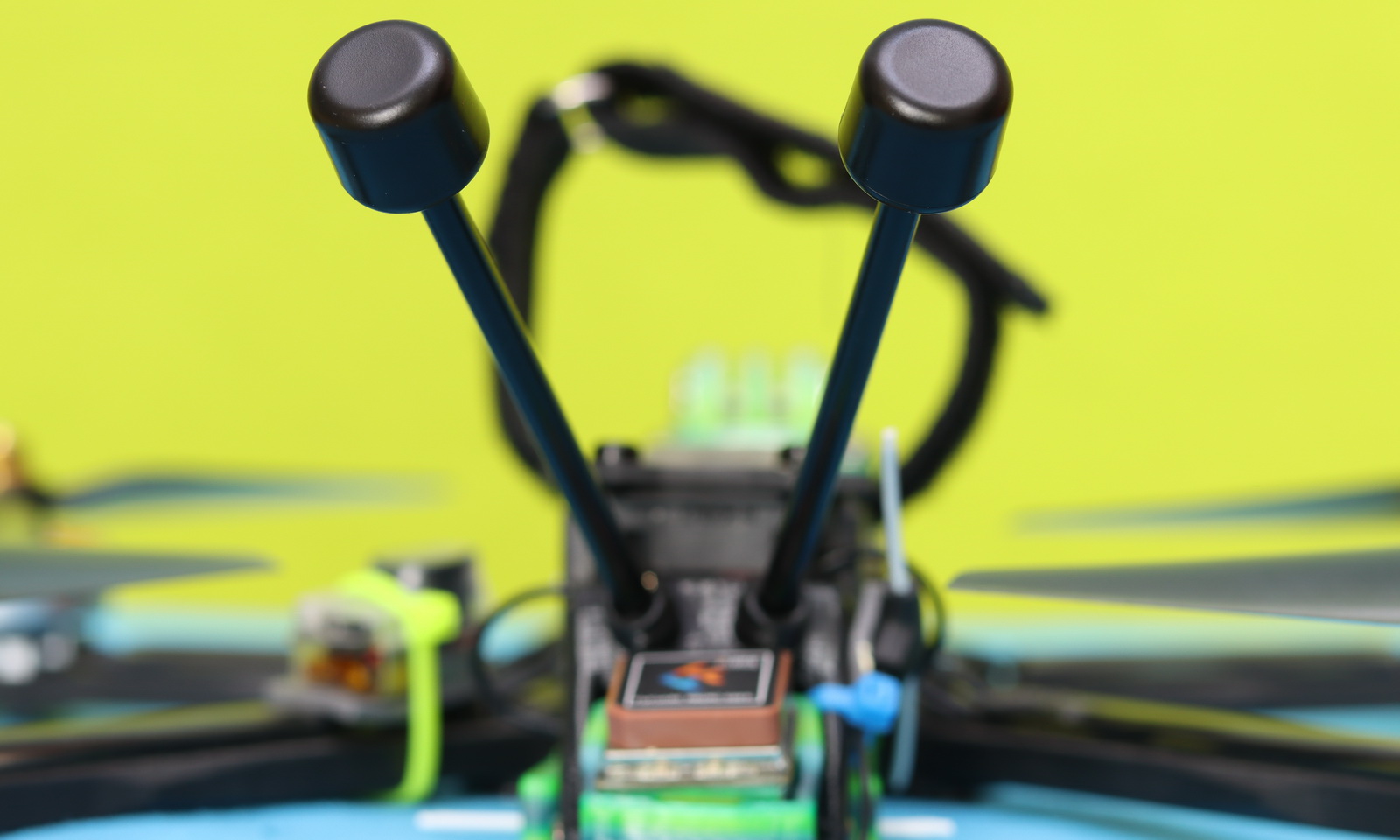
To put the Avatar GT2 through its paces, I paired it with the Goggles X, both running their stock antennas. On the control side, I used a RadioMaster XR4 Gemini Xrossband dual-band ExpressLRS receiver together with a TX16S MK3 MAX radio controller featuring a built-in 1W dual-band transmitter module. This combination allowed me to evaluate the GT2’s video performance alongside a high-quality control link, minimizing the risk that the radio system would become the limiting factor.
Video quality and performance
On the first test flight, I left the transmission power set to 25mW, without knowing. Prepared for a range test, I flew straight ahead at top speed. Reaching 200 meters, the signal became glitchy, and shortly, the red square on the edge of the image appeared, indicating that I would lose the video signal soon. I reached 350m and decided not to risk it, and turned back. I had a second with the image blocked, but luckily, I managed to navigate back until the signal was completely restored.
For the second flight, I enabled the 2W dynamic mode, and the difference was immediately noticeable. This time, I had no issues with signal strength at all. I managed to fly about 2 km away without any problems, which is already within my personal safe range.
I usually don’t push it further, as going too far doesn’t really make sense for my kind of flying. Still, if you’re looking for truly long-range HD video transmission, this system is probably one of the best options available right now.

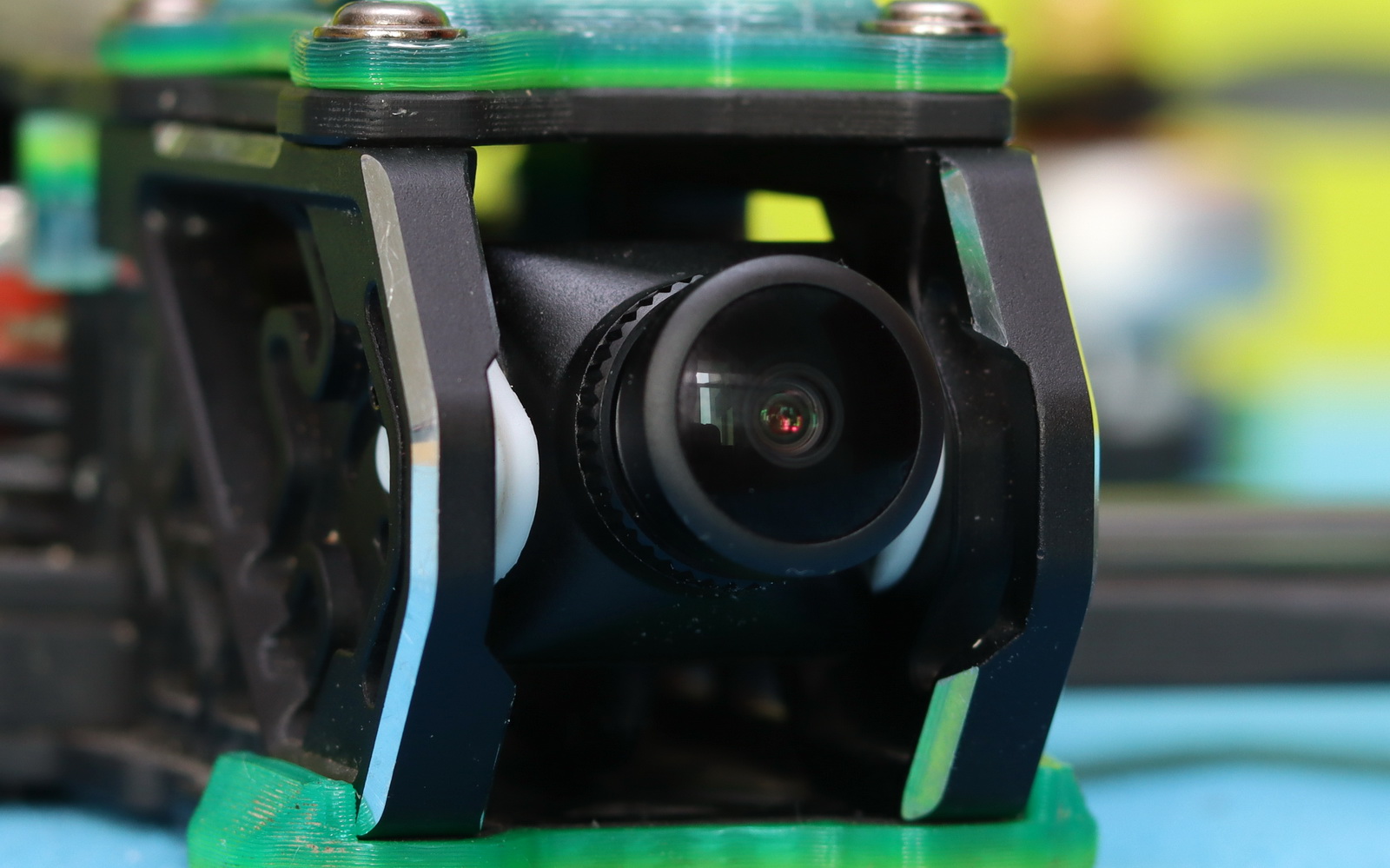
Despite using a soft mount for the Avatar HD Pro camera, I still ended up with quite a bit of jello in the footage. It was noticeable enough to ruin the overall look, especially during movement. In the end, the clips only became watchable after stabilizing them in GYROflow — without that step, they’re simply not enjoyable.
Walksnail Avatar GT vs GT2 Comparison: What’s new?
The second-edition (SE) Avatar GT VTX was released two years after the original model, with its main improvements focused on better power delivery and heat management. Unfortunately, the size and weight of the unit remain almost unchanged. Walksnail didn’t improve the range or latency of the system, which honestly wasn’t really necessary, as both were already outstanding on the original Avatar GT.
The GT2 promises a maximum power consumption of 16W, while the previous model used up to 24W. Since the GT SE features dynamic TX power, the average power consumption is probably much lower.
| Specifications/Features | Avatar GT (first edition) | Avatar GT2 |
| Release year | 2024 | 2026 |
| VTX dimensions | ~34 × 34 × 23 mm | ~34 × 36 × 23.5 mm |
| Total weight | ~52 grams | ~57 grams |
| Camera | 1/1.8-Inch Sony Starvis Ⅱ sensor | 1/1.8-Inch Sony Starvis Ⅱ sensor |
| Max power output | Up to 2W EIRP class (FCC mode) | Up to 2W dynamic output (FCC mode) |
| Latency | Min 22ms | Min 22ms |
| Max range | 20KM (65,617 ft) | 20KM (65,617 ft) |
| Max power use | 24W | 16W |
| Input voltage | 3–6S (11.1–25.2V) | 3–6S (11.1–25.2V) |
| Price | $139 | $199 |
Compliance Notice: The use of FCC mode is prohibited within the CE region (European Union). Additionally, transmitting at a power level of 2W is subject to licensing requirements and may only be performed by individuals holding a valid amateur (ham) radio license, in accordance with applicable laws and regulatory frameworks.
Avatar GT2 vs O4 Air Unit Pro: Which Should You Choose?
As you can see in the table below, the Walksnail Avatar GT2 prioritizes transmission distance and ultra-long-range flights, even with the stock antenna setup. In contrast, the DJI O4 Air Unit Pro, featuring onboard 4K@120fps recording, is designed to capture high-quality footage without the need for an additional action camera. The O4’s lower latency also makes it more suitable for freestyle flying, where response time (latency) is essential.
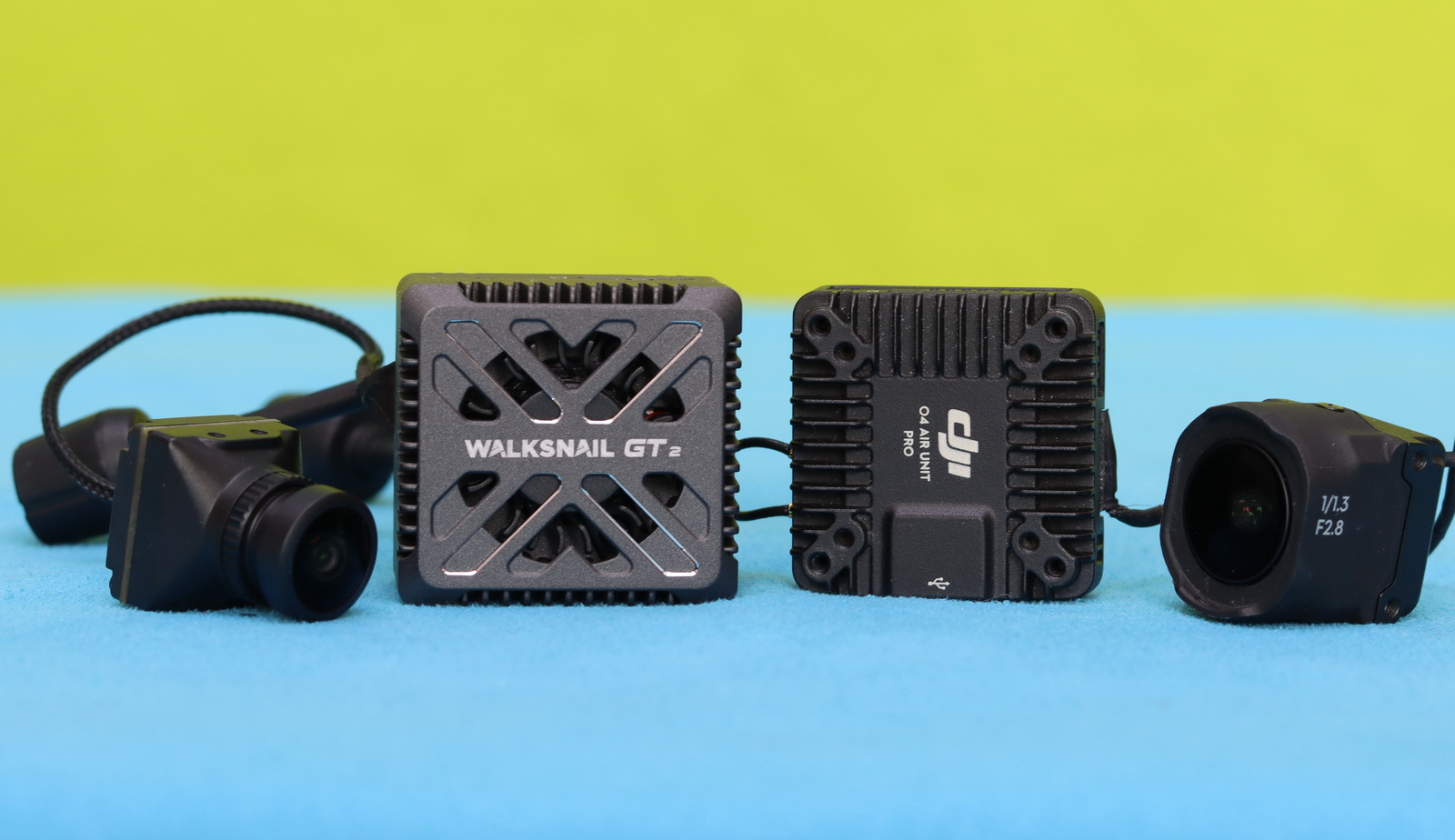
An important thing to note is that these two systems use different connections. On the DJI O4, the last two pins are dedicated to SBUS radio connectivity, while on the GT2, those same pins are used to control a gimbal. Although the connectors may look similar at first glance, they serve different purposes, so the wiring is not directly compatible.
| Specifications/Features | Walksnail Avatar GT2 | DJI O4 Air Unit Pro |
| Release date | April 2026 | January 2025 |
| Primary focus | Long-range FPV | Cinematic FPV |
| Claimed range | Up to 20 km | FCC: Up to 15 km CE: Up to 8 km |
| Antennas | Dual antenna | Dual antenna 2T2R |
| Latency | ~22 ms | ~15 ms |
| Recording capability | 1080P | Up to 4K@120fps |
| Internal storage | No | 4GB |
| Input voltage | 3–6S (11.1–25.2V) | 3-6S (7.4–26.4V) |
| Cooling system | Active with fan | Passive with heatsink |
| Dimenssiones | 34 × 36 × 23.5 mm | 33.5 × 33.5 × 13 mm |
| Weight | ~52 g | ~32 g |
| Price | $199 | $229 |
Since 2014, FirstQuadcopter has reviewed, thoroughly tested, and rated hundreds of products, including drones, gimbals, power stations, action cameras, 3D printers, video lights, and other high-tech gear to help you make better buying decisions.
We don’t do paid reviews or agree to affiliate links. All products are tested fairly and equally, and if anything changes over time, I will update the written reviews.
As always, if you found this review helpful, don’t forget to like, share, comment, and bookmark for more content like this.
Thank you for your review. One question: did you try using the GT2 VTX with the Walksnail Moonlight 4K camera?